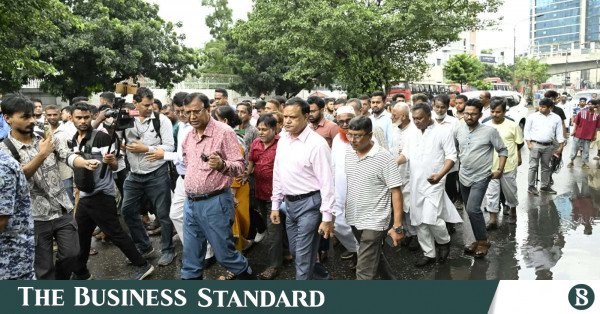
If you excavate canals in a planned manner, rainwater will be stored there, and surface water will remain available, he says.
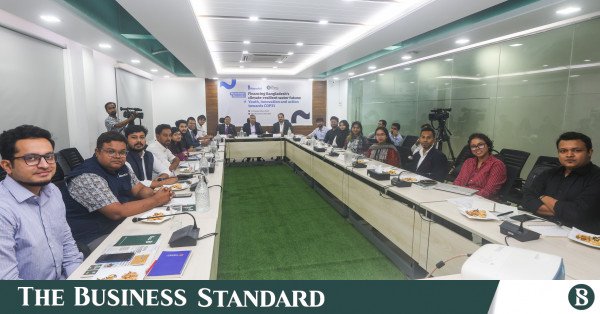
Participants at a roundtable titled “Financing Bangladesh’s Climate Resilient Water Future: Youth Innovation and Action Towards COP31”, jointly organised by The Business Standard and WaterAid Bangladesh on Thursday, 24 September 2026. Photo: TBS
“>

Participants at a roundtable titled “Financing Bangladesh’s Climate Resilient Water Future: Youth Innovation and Action Towards COP31”, jointly organised by The Business Standard and WaterAid Bangladesh on Thursday, 24 September 2026. Photo: TBS
The proposed Padma Barrage will benefit people living across one-third of Bangladesh by expanding dry-season agriculture and transforming regional economies, Water Resources Minister Md Shahiduddin Chowdhury Anee has said.
“If the Padma Barrage is built, people across one-third of Bangladesh will receive its full benefits. These include increased agricultural activities and economic transformation, particularly during the dry season,” he said.
The minister was speaking at a roundtable titled “Financing Bangladesh’s Climate Resilient Water Future: Youth Innovation and Action Towards COP31”, jointly organised by The Business Standard and WaterAid Bangladesh yesterday (24 September) at TBS conference room.

The programme was moderated by Shamim A Zahedy, while Md Zarif Oeishik, project delivery expert at WaterAid Bangladesh, and Shahreena Mumtaz, project officer at WaterAid Bangladesh, delivered the keynote presentation.
Groundwater under growing pressure
Anee also highlighted growing pressure on Bangladesh’s groundwater, saying planned excavation and re-excavation of canals could increase surface-water availability while supporting agriculture, fisheries, ecosystems, rural economies and inland transportation.
“If you excavate canals in a planned manner, rainwater will be stored there and surface water will remain available,” he said, referring to the canal excavation programme initiated around five decades ago.
Anee also warned that rising salinity in coastal areas was already affecting irrigation, drinking water and fisheries.
He also urged young people to take a greater role in addressing water and climate challenges and mobilising international financing.
Policy continuity, climate finance crucial
Azman Ahmed Chowdhury, country director of WaterAid Bangladesh, called for stronger and more consistent policy support for climate and water-related initiatives.
“Policy sustainability is also related to policy continuity. An initiative may lead to the adoption of a policy, but if changes are made later, a gap emerges in its sustainability,” he said.
He called for greater access to public and private financing for climate-focused businesses and youth-led solutions, pointing to the government’s startup fund, which he described as being worth around Tk500 crore, as a potential financing source.
Azman also highlighted Bangladesh Bank’s green financing facilities and urged private financial institutions to be more flexible when funding new climate solutions.
Bangladesh faces an annual climate-financing requirement of around $8.5 billion, he said, stressing that funding should reflect the country’s actual needs rather than primarily the priorities of donors and funders.
“We need to re-educate our donors to some extent,” he said.
He also urged Bangladesh’s representatives at COP31 to remain confident in climate-finance negotiations and push for mechanisms that better support vulnerable countries and youth-led initiatives.
Much of the available climate funding comes with conditions such as blended finance, matching funds or interest-bearing components, he said.
Youth-led solutions
Azman said climate-sensitive initiatives in South and Southeast Asia are increasingly being led by young people, although financing mechanisms to nurture them remain limited.
WaterAid Bangladesh runs Blue Platform, which supports innovative ideas from young and social entrepreneurs working on climate solutions by connecting them with support from the initial idea stage through mentorship, he said.
The roundtable featured youth representatives and entrepreneurs working on water and climate solutions, including Md Iliyas Hosen from Satkhira; Md Abu Bokkor Sadhin from Naogaon; Navid Haider, CEO of CarboBon; Ashraf Islam Ashfaq, COO of AquiVira; and Tanvir Ahamed, co-founder of Hopedrop.
Representatives from ActionAid Bangladesh, ICCAD, JAAGO, City Bank, Teach For Bangladesh, Klima, YOUNGO, the International Water Association Young Water Professionals Bangladesh and Brighters also participated.
The WaterAid Bangladesh country director said the participation of community representatives from Satkhira and Naogaon brought local water challenges into the discussion, while youth-led innovations showed that practical solutions were already emerging.
He urged young participants to scale up their initiatives and said WaterAid Bangladesh would support them where possible.
About The Author