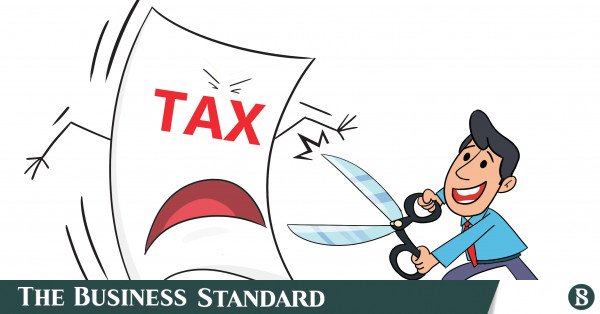
Fuel prices and demand have increased since the conflict involving Iran, contributing to higher revenue collection from the sector.
Infographics: TBS
“>

Infographics: TBS
Highlights
- Govt raised fuel prices by Tk20 per litre, citing BPC losses and smuggling concerns.
- Economists say the hike could fuel inflation amid limited fiscal measures.
- Fuel taxes account for around 32% of import costs under the invoice-value system.
- BPC made Tk55,837 crore in net profits over the decade since FY15, despite recent losses.
- Higher fuel prices are expected to raise transport, irrigation and production costs.
The government has raised fuel prices to curb losses at the Bangladesh Petroleum Corporation (BPC), prompting economists to question the move as the state prepares to spend more on a new pay scale for public employees while other countries are offering relief to consumers.
Economists and business leaders have sharply questioned why the administration has steadfastly declined to offer tax relief. Across the globe, governments faced with surging crude costs stoked by ongoing conflicts in the Middle East, have deployed tax cuts, margin caps, and targeted subsidies to cushion households.

Zahid Hussain, former lead economist at the World Bank’s Dhaka office, said the government’s financial capacity to expand social safety-net programmes to protect people from additional inflationary pressure had also been constrained by the implementation of the new pay structure.
“The latest fuel price increase could add to inflationary pressure, while the government did not appear to be taking sufficient fiscal and monetary measures to contain the impact,” he said.
Social media platforms have also seen widespread criticism of the fuel price hike, with users questioning why consumers are being asked to bear higher fuel costs while the government is collecting more revenue from fuel taxes. Many posts have also contrasted Bangladesh’s decision with tax cuts and other consumer-support measures adopted by several countries amid the global rise in energy prices.
According to the International Energy Agency (IEA), at least 55 countries, including regional competitors like India, Pakistan, Vietnam, and South Korea, have taken direct fiscal measures to shield consumers. Bangladesh, however, remains a distinct outlier.
On Sunday night, the government announced an immediate Tk20 per litre price hike across all fuel types, citing operational losses at the Bangladesh Petroleum Corporation (BPC) and fears of cross-border smuggling into neighbouring countries.
Yet critical analysis of the country’s fuel tax architecture reveals how the state passively profits as global prices rise. Domestic fuel prices are saddled with approximately 32% in cumulative duties and taxes applied directly to import costs. Under the current “invoice-value” taxation system retained by successive administrations, duties are calculated as a percentage of the actual import price rather than a fixed tariff value. Consequently, when international prices surge, both the retail price and the government’s absolute revenue per litre automatically inflate.
According to people familiar with the matter, refined fuel in the Singapore spot market is currently priced at $181.80 a barrel, equivalent to around Tk140 a litre. After around 32% in duties and taxes, the import cost rises to approximately Tk185 a litre, of which around Tk45 goes to the government as revenue.
M Shamsul Alam, energy adviser at Consumers Association of Bangladesh (CAB) and dean of the Faculty of Engineering at Daffodil University, criticised the government’s approach to fuel taxation and pricing.
“The government takes a large amount in VAT and taxes while also making profits. The government is not supposed to make profits,” he told TBS.
Alam disputed the argument that the government had consistently subsidised fuel, saying the government had made profits from fuel over several years and had not always reduced domestic prices when international prices fell.
Revenue from fuel imports rises with prices
According to the Centre for Policy Dialogue, the NBR collected Tk9,251 crore from the BPC in the fiscal 2022-23.
Fuel prices and demand have increased since the conflict involving Iran, contributing to higher revenue collection from the sector.
Officials from the Energy Division and the NBR said that during the previous Awami League government, the energy agency had asked the revenue authority to reduce fuel taxes when prices were rising following the outbreak of the Russia-Ukraine war in order to keep domestic prices affordable.
They said the Energy Division did not make a similar request after the conflict involving Iran began, despite a sharp increase in international fuel prices.
Under the previous government, fuel import duties and taxes were calculated on a tariff value, meaning higher international prices did not automatically increase the tax burden. Towards the end of that government’s tenure, the basis was changed from tariff value to invoice value, meaning that higher import prices now result in higher tax collection.
The interim government and the BNP government have continued to follow the invoice-value system.
Fuel prices add to wider economic pressure
The government is expected to spend more than Tk1.05 lakh crore in additional salaries and allowances over the next 17 months to implement a new pay structure for around 24 lakh government employees and pensioners.
Against this backdrop, the higher fuel prices could increase BPC revenue by around Tk10,000 crore while also generating additional tax revenue for the government, according to people familiar with the matter.
The fuel price increase has already been followed by a 17-paisa-per-kilometre increase in passenger bus fares. Freight charges for trucks and inland waterway vessels are also expected to rise.
Higher irrigation costs are likely to increase agricultural production costs, adding to the overall cost of living and reducing consumers’ purchasing power. The resulting pressure could also affect industrial production, investment, employment and the wider economy.
BPC makes large profits over past decade
Despite the high level of taxes collected on fuel, the BPC recorded net profits of around Tk55,837 crore over the decade since FY15.
During the same period, the corporation paid around Tk34,000 crore to the government in dividends and taxes.
However, according to BPC figures, the corporation incurred losses of Tk20,059 crore from March to July this year.
NBR data show that the government collected Tk13,700 crore in revenue from nine types of fuel, including high-speed diesel, furnace oil, kerosene and LPG, in FY26, up from Tk10,600 crore in FY25. That represents an increase of around 29%.
In the first two months of the current FY27, revenue from fuel and LPG reached around Tk3,800 crore, compared with approximately Tk2,000 crore during the same period a year earlier, an increase of around 90%.
An NBR senior official, speaking to TBS on condition of anonymity, said the tax calculation has previously been based on tariff value but is now based on invoice value, which would increase revenue collection.
Consumer groups call for lower taxes
SM Nazer Hossain, vice-president of CAB, said a 32% import tax on essential fuel products is unreasonable.
“We had previously called for a reduction in this rate at a Bangladesh Energy Regulatory Commission hearing,” he told TBS.
Nazer said the depreciation of the taka against the US dollar had increased the cost of fuel by more than 30%, with the government collecting taxes on the additional import cost as well as receiving more revenue when fuel prices rise.
“The burden is ultimately being passed on to consumers,” he said.
Nazer also said the NBR’s revenue targets had encouraged it to focus on sectors where taxes could be collected relatively easily.
“Fuel is the heart of the economy. When fuel prices rise, the cost of living for everyone increases,” he said, arguing that the tax burden on fuel imports should be kept as low as possible.
Economists question shift from formula-based pricing
Economist Zahid Hussain said the government has a formula for determining fuel prices and is supposed to set the price for the following month on the last day of each month.
He said the government had announced at the end of August that fuel prices would not rise in September, but subsequently increased them.
“The government has shifted from a formula-based policy to a decision-based policy. There has been a deviation in the application of the policy since this government came to power, and the same policy was not followed when prices were raised in April. As a result, transparency has been lost,” he said.
Zahid said the NBR had limited scope to reduce taxes because Bangladesh’s tax-to-GDP ratio is only 6.8%.
“If fuel prices are not increased, the government will have to provide subsidies, and the money for those subsidies will ultimately have to be collected from the public as revenue,” he said.
He said the government would therefore have to raise revenue elsewhere or reduce spending.
How other countries use tax cuts and targeted support
Fuel taxes are common in both oil-producing and oil-importing countries. Oil producers such as Saudi Arabia levy VAT, while importing countries often impose excise duties and customs taxes. Some advanced economies also impose carbon taxes.
In some European countries, taxes account for nearly half of the retail fuel price. In the Netherlands, for example, taxes account for 52% of the pump price.
However, when global oil prices surge, many governments choose not to pass the entire increase on to consumers. They use fuel-tax cuts, price caps, direct subsidies and targeted assistance to cushion households and businesses.
The IEA says governments have adopted a range of short-term measures to reduce fuel consumption and lower costs for households and businesses following the disruption in global energy markets.
Pakistan, for example, has raised domestic fuel prices while providing targeted subsidies for vulnerable groups, including motorcyclists, farmers and the transport sector.
India has cut excise duties and capped refinery and fuel-retailer margins to limit the impact on consumers.
Vietnam, a major competitor to Bangladesh in apparel exports, suspended some fuel taxes and reduced other levies for three months in March before extending the measures in June until the end of September.
The Vietnamese government said the extension would help maintain macroeconomic stability and prevent a sudden increase in fuel prices.
South Korea has combined fuel-tax reductions with price controls and targeted support, and has extended its fuel-tax cuts amid continuing volatility in global oil markets.
About The Author