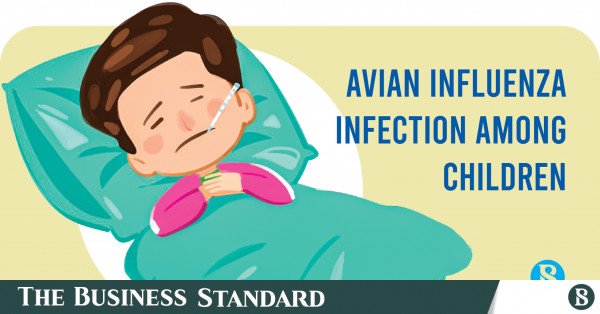
Four bird flu infections, all children, this year renew concerns over poultry exposure
Infographics: TBS
“>

Infographics: TBS
Highlights
- Bangladesh has recorded four H5N1 cases this year.
- All four cases involved children; two have died.
- The infections were linked to contact with ducks and chickens.
- Experts urged stronger poultry surveillance and preventive measures.
- WHO data show 1,003 H5N1 cases and 479 deaths worldwide since 2003.
Bangladesh has recorded its fourth human infection with avian influenza A(H5N1), commonly known as bird flu, this year, with all four cases involving children and one resulting in death, according to the World Health Organization (WHO).
The infections have been linked to exposure to ducks and chickens, the WHO said in its latest “Influenza at the Human-Animal Interface: Summary and Risk Assessment”, covering 8 August to 6 September and published on 19 September.
Public health experts said the re-emergence of cases over the past two years warrants stronger surveillance and preventive measures, particularly to keep children from coming into contact with domestic ducks and chickens.

The latest case involved a child from Rangpur division who developed fever, cough and rhinitis on 15 August and was admitted to hospital two days later. The child remained hospitalised and was clinically improving when the case was reported.
The child had no recent travel history but had been exposed to ducks and chickens, including sick poultry, at home and in neighbouring households.
Dr Quazi Ahmed Zaki, director of the Institute of Epidemiology, Disease Control and Research (IEDCR), told TBS that all human avian influenza infections detected in Bangladesh this year have involved children.
“We found links between the infections and exposure to ducks and chickens,” he said. “Direct contact with poultry was more likely the source than consuming poultry products.”
Dr Zaki said the virus can enter the body through handling, slaughtering or direct contact with infected or sick poultry. “There is no risk of infection from eating properly cooked poultry meat.”
H5N1 is a zoonotic disease, meaning it can spread from animals to humans. “Therefore, regular monitoring of farms and poultry must be strengthened,” he said.
“Poultry must be tested regularly. If infected birds are detected, the Department of Livestock Services must act under its regulations. Unless we control the virus at its source, we cannot completely prevent human infections,” Dr Zaki said.
17 cases since 2003
The latest case brings Bangladesh’s total human H5N1 infections to 17 since 2003, including two deaths – one in 2013 and another earlier this year. Three cases were reported in 2025, with no deaths, while no cases were reported between 2020 and 2024.
The first fatal case of 2026 involved a child from Chattogram Division who died on 1 February. Laboratory testing subsequently confirmed H5N1 infection on 7 February.
Two other child cases from Sylhet Division were reported before the latest Rangpur case.
Keep children away from poultry
The detection of four H5N1 infections in children this year is a pandemic threat that warrants heightened surveillance and preventive measures, said Dr Mohammad Mushtuq Husain, former principal scientific officer at IEDCR and a public health expert.

“H5N1 is an avian influenza virus and we consider it a pandemic threat. The detection of new human infections also shows that our surveillance system is working – at least we are identifying the cases,” Dr Mushtuq told The Business Standard.
He said infected poultry farms were previously subjected to culling, but vaccination is now being used in many cases. However, vaccination does not eliminate the virus.
“Vaccination reduces deaths among chickens, but it does not completely stop the virus from being produced. This can increase the concentration of the virus and leave a risk of transmission to humans,” he said.
Children in rural areas often play with or handle domestic poultry, increasing their risk of infection, he said. “Children must be kept from touching domestic ducks and chickens.”
He also recommended making it mandatory for poultry workers and live-bird sellers to wear masks and gloves and wash their hands with soap after work.
Adults can be infected too
H5N1 can infect adults as well as children, according to Dr Mushtuq. As the virus is relatively new to humans, most people have no pre-existing immunity against it.
“Although more cases may be detected among children, adults are also at risk. The risk of complications and death is higher among people with weakened immunity,” he said.
Dr Mushtuq said hospitals in Bangladesh should enforce stricter hygiene measures to prevent influenza transmission. He also urged experts to give serious consideration to introducing seasonal influenza vaccination in the country.
According to cumulative WHO data for 2003-2026, 1,003 human cases of avian influenza A(H5N1) have been confirmed worldwide, including 479 deaths.
About The Author