PEDP5 is scheduled to run from July 2026 to June 2031.
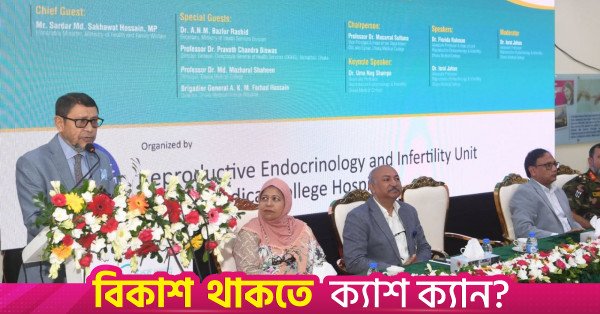
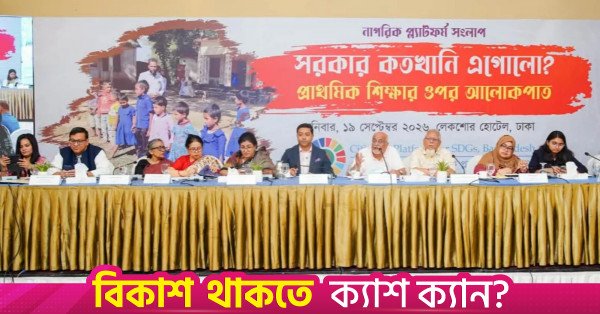
Speakers at a dialogue on the government’s progress in implementing primary education commitments in Dhaka on Saturday (19 September 2026). Photo: UNB
“>

Speakers at a dialogue on the government’s progress in implementing primary education commitments in Dhaka on Saturday (19 September 2026). Photo: UNB
Sixteen of the government’s 24 pledges related to primary education are directly linked to the Fifth Primary Education Development Programme (PEDP5), which is yet to be approved, putting their implementation at risk, according to the Centre for Policy Dialogue (CPD).
PEDP5 is scheduled to run from July 2026 to June 2031.
The findings were presented at a dialogue in Gulshan yesterday organised by the Citizen’s Platform for SDG Implementation, Bangladesh, reviewing the BNP government’s first 200 days.

Learning outcomes, rather than infrastructure, should be the main measure of progress.
Bobby Hajjaj State Minister for Primary and Mass Education
Of the 24 primary and cross-cutting pledges assessed by CPD, four are at the reform proposal stage, nine at reform initiation, four at the legal and policy framework stage and seven at operationalisation. None has reached the “action implementation” stage.
The PEDP5-linked pledges include free school uniforms, universal pre-primary education, student health and nutrition, “one teacher, one tablet” programme, skilled teacher development, girls’ health protection and “one child, one tree” programme.
They also cover education for children with special needs, sports and cultural education, dropout prevention in remote areas, creativity and analytical thinking, multimedia classrooms, free Wi-Fi and opportunities to develop students’ talents.
PEDP5 also focus on foundational literacy and numeracy, structured pedagogy, early childhood development, water, sanitation and hygiene, and equitable education in hard-to-reach areas. CPD recommended approving the programme quickly and explaining the delay.
Seven pledges are being operationalised, including mid-day meals, multimedia classroom expansion, easier teacher retirement benefits, “one child, one tree”, talent development, “Notun Kuri” Quran recitation and the pledge to spend 5% of GDP on education.
The mid-day meal programme covers about 52,700 students in 415 Bhola schools and has been introduced in 592 Faridpur schools, but food quality and monitoring remain concerns. Multimedia classrooms face maintenance and effectiveness problems.
Teacher retirement benefits are being processed nationwide through iBAS++, with Tk2,035.86 crore allocated, though pending applications and partial payments remain.
The government reports planting 337,609 trees under “one child, one tree” programme. The first “Notun Kuri Sports 2026” event has ended, with another sports subject planned from 2027. Quran memorisation and seerat competitions have also been held, although a separate Quran recitation programme lacks a clear structure.
The 2031 target of spending 5% of GDP on education also remains unmet. Education received 1.8% of GDP in FY2027, while actual spending was about 1.3% in FY2025.
Some 76.5% of the FY2027 operating budget is for salaries and allowances, while 78 of 101 development projects are infrastructure-focused.
CPD said visible initiatives had progressed faster than structural reforms in teacher management, reducing inequality and strengthening schools.
Field-level problems include staffing and maintenance shortages for multimedia and Wi-Fi, inadequate SLIP funds and ineffective school management committees in many schools.
State Minister for Primary and Mass Education Bobby Hajjaj said learning outcomes, rather than infrastructure, should be the main measure of progress. He said teacher recruitment, careers, evaluation and training are being brought under an integrated framework and that all types of primary schools will gradually come under monitoring.
Former adviser Rasheda K Chowdhury stressed effective classroom learning, mothers’ involvement in mid-day meals, birth registration for indigenous and children with disabilities, and SLIP fund-management reforms.
Tasnim Zara called for schools to address smaller problems alongside infrastructure, train teachers for emergencies, establish clear career-progression criteria and introduce an interoperable student education ID.
Jahangirnagar University professor Nahrin Islam Khan stressed equal standards of education and early lessons on ethics, justice, culture and environmental responsibility.
CPD Distinguished Fellow Debapriya Bhattacharya chaired the dialogue. CPD Additional Research Director Towfiqul Islam Khan presented the keynote paper. Officials, lawmakers, education-sector representatives and civil society members attended.
About The Author