It is also earning around $30 million annually from direct exports
Infograph: TBS
“>

Infograph: TBS
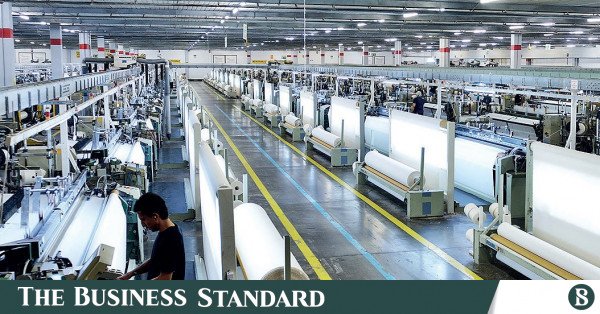
Modern Syntex, a concern of TK Group, entered the polyester business in 2002 through Modern Poly Industries Ltd with an initial capacity of just 10 tonnes a day.
The production rose to 100 tonnes a day in 2017 and now stands at 460 tonnes.
Now, the facility meets nearly 21% of the country’s demand for polyester products and earns around $30 million annually from direct exports, with production of around 161,000 tonnes in total, Shafal Barua, senior general manager (Engineering) of the organisation, told TBS.
The company initially imported polyester chips and processed them into filament yarn. However, the process consumed relatively high amounts of energy and increased production costs.

The facility later moved upstream by producing polyester chips locally through continuous polymerisation, he said.
Planning for the integrated facility began around 2017, with the company choosing the National Special Economic Zone in Mirsharai of Chattogram for its land availability, infrastructure and investment facilities, he said.
The facility was built with around Tk1,700 crore in investment using German technology to produce polyethylene terephthalate (PET) chips, fully drawn yarn, draw textured yarn, and polyester staple fibre (PSF), according to him.
It has acquired an additional 3.75 acres in the special economic zones for expansion, which is expected to create around 120 specialised jobs, Shafal said.
The facility produces 78,750 tonnes of PSF, 43,750 tonnes of polyester filament yarn and 38,500 tonnes of PET chips yearly.
Bangladesh’s annual demand for PSF is 160,000 tonnes; polyester yarn is estimated at 500,000-550,000 tonnes, while PSF demand stands at around 140,000-160,000 tonnes. A significant portion of the demand is still met through imports.
It supplies domestic textile manufacturers as well as overseas buyers. Its local production also substitutes synthetic materials previously imported mainly from China, India, Indonesia and South Korea.
Company officials estimate that the facility saves Bangladesh around $60 million in foreign exchange annually through import substitution.
“If local production becomes stronger, import dependence will become lighter. At the same time, the forward section of the industry will become more diversified,” Shafal said.
Industry estimates suggest polyester demand in Bangladesh is growing by roughly 10% annually.
Polyester key to RMG diversification
Bangladesh’s apparel exports remain heavily dependent on cotton, while global demand for polyester and other man-made fibres continues to rise.
Shafal said promoting polyester is essential if Bangladesh wants to diversify its apparel export basket.
“Outside natural fibre, polyester is one of the cheapest and most affordable alternatives. If Bangladesh wants to expand its RMG sector further, polyester has to be promoted,” he said.
He said changing consumer preferences and fashion trends are driving demand for synthetic fibres, while natural fibres have limitations.
A stronger domestic polyester industry could also attract investment in polyester-based textile and apparel manufacturing by ensuring a more reliable supply of raw materials.
Competition, policy support
Local manufacturers face intense competition from foreigners, including Chinese and Indonesian producers, which benefit from decades of experience, advanced technology, skilled manpower and large-scale production.
Shafal said stronger policy support is needed to help Bangladeshi manufacturers compete internationally.
He noted that recycled polyester producers currently receive export incentives of around 6%, while virgin polyester manufacturers receive significantly lower support.
“If we do not get these policy facilities, it becomes very difficult to compete with the major manufacturers across the world,” he said.
The company also needs uninterrupted electricity, gas and other utilities, as continuous polymerisation is highly sensitive to supply disruptions.
“Once these processes are stopped, restarting them and bringing the product back to the required quality takes time and causes significant losses,” Shafal said.
Water, skilled manpower crisis
Modern Syntex has not faced major electricity or gas supply problems at its Mirsharai facility, but industrial water supply remains a concern.
The factory partly relies on groundwater and deep tube wells. Shafal said planned water treatment facilities by the Bangladesh Economic Zones Authority could help address the issue, but long-term planning is needed.
The company employs around 1,100 people, many from Chattogram and surrounding areas. Specialised technical manpower remains another challenge.
The company initially recruited technical personnel from across the country and brought in foreign experts to train local employees.
“We are developing people through on-the-job training. Our local employees work alongside foreign experts and gradually develop the required skills,” Shafal said.
Former BGMEA Vice President Rakibul Alam Chowdhury said stronger domestic polyester production would help Bangladesh diversify its apparel exports.
“Polyester is becoming increasingly important in the global apparel industry. If Bangladesh wants to diversify its export basket and move towards higher-value products, it must strengthen its local supply chain for man-made fibres,” he said.
A stronger polyester backward linkage would reduce lead times and import costs, ease pressure on foreign exchange and improve the competitiveness of local textile manufacturers, he added.
About The Author