The state minister says financial assistance should prioritise students from families facing greater economic hardship and those at higher risk of dropping out.
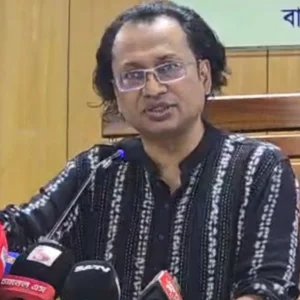
File photo of State Minister Bobby Hajjaj. Photo: Collected
“>

File photo of State Minister Bobby Hajjaj. Photo: Collected
Highlights:
- Financial need should determine scholarship and stipend priority
- Children at greater risk of dropping out should receive more support
- School feeding and other support programmes should be better coordinated
Scholarships and stipends should prioritise students based on their financial need and vulnerability rather than providing equal support to all, State Minister for Primary and Mass Education Bobby Hajjaj said today (15 September).
“Giving equal support to all students does not ensure true equality in education. Giving greater priority to those who need it most is true fairness,” he said.

The state minister made the remarks as the chief guest at a workshop titled “From Evidence to Action: Presentation of Research Findings on the Effectiveness of School-Level Improvement Plans (SLIP)” organised by the Directorate of Primary Education, Power and Participation Research Centre (PPRC) and Unicef at the Bishwo Shahitto Kendro auditorium in Dhaka.
Hajjaj stressed the need to develop an “equity-based” system for scholarships and stipends so that every taka of government assistance reaches students who genuinely need it to continue their education.
Even a small amount of financial assistance can play a major role in keeping a child from a poor or disadvantaged family in school, he added.
He said scholarship and stipend policies should consider a family’s financial capacity, a child’s social and economic vulnerabilities, and the risk of dropping out.
The state minister also said the need for government financial assistance could be reconsidered for families that are financially capable but choose to send their children to private educational institutions despite having access to free education at government primary schools.
At the same time, children from families struggling to meet education costs should receive the highest priority, he said.
“Our responsibility is to ensure that the government’s limited resources reach children who need them the most,” Bobby Hajjaj said.
He said the government’s goal should go beyond ensuring school enrolment and include preventing children from dropping out because of poverty, financial hardship or other barriers.
He stressed the need to make all support programmes, including scholarships, stipends, educational materials and school feeding, more coordinated and targeted.
The state minister also called for greater use of data-driven decision-making and improved capacity to identify students who are genuinely disadvantaged to ensure the effectiveness of government assistance.
About The Author