Bangla QR misuse is inflating digital payment figures and raising fraud, tax evasion and money laundering concerns.
Infographic: TBS
“>

Infographic: TBS
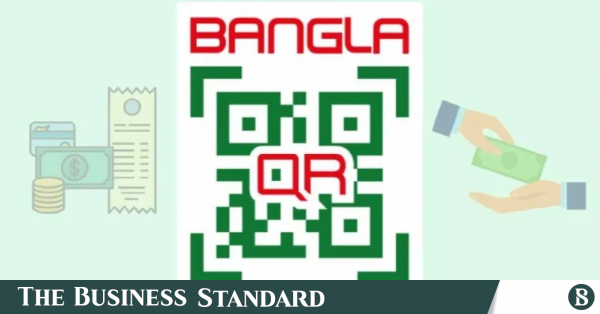
Bangla QR, a unified QR payment platform designed to facilitate digital transactions at zero fee, is being abused by some merchants and MFS agents to bypass cash-out charges, raising concerns over the sustainability of the country’s mobile financial services (MFS) ecosystem and the reliability of digital transaction data.
Under this practice, customers use Bangla QR to move money from their MFS accounts into merchant bank accounts, receiving an informal cash payout equal to what they would get after standard MFS cash-out charges.
The other major issue is that Bangla QR is being misused for suspicious transactions, creating an inflated and misleading picture of the country’s digital payments ecosystem and raising concerns over fraud, tax evasion and money laundering.
According to several industry insiders and experts who spoke to The Business Standard, some unscrupulous merchants and MFS agents are allegedly accepting Bangla QR payments without providing any goods or services and then returning cash to customers after deducting a fee.

For example, a customer may pay Tk10,000 through a merchant’s Bangla QR code and receive around Tk9,815 in cash, or likely even more. The merchant effectively becomes an alternative channel for MFS cash-out, while pocketing the cash-out charge.
MFS customers normally pay Tk13 to Tk18.50 per Tk1,000 for cash-out. Cash-out is capped at Tk30,000 a day and Tk2 lakh a month, while the P2P transaction limit is Tk50,000 a day and Tk3 lakh a month.
Banks can offer lower costs because their funding structures are different.
Moreover, the misuse of Bangla QR could also allow customers to bypass MFS cash-out limits because merchant payments do not face the same restrictions as cash withdrawals.
Suppose a customer has Tk500,000 in an MFS account. With a daily cash-out limit of Tk30,000, the customer cannot withdraw the entire amount in cash through the normal cash-out channel in a single day or even a month. But there is no equivalent restriction on merchant payments.
Instead, the customer can make multiple payments through Bangla QR.
This creates a potential channel for moving large sums while making the transactions appear to be ordinary digital payments. It can also make it harder to trace the original source and destination of the money, creating economic and regulatory risks.
The practice appears to be reflected in unusual merchant transaction patterns, according to industry insiders.
Some small businesses with historically low turnover have reportedly received repeated QR payments of around Tk5 lakh, sometimes within short intervals and from different locations. Such transactions do not appear consistent with genuine commercial sales, a source said.
The misuse is also reflected in the unusual rise in digital payments through Bangla QR. The average daily transaction value almost tripled in just one month, rising from more than Tk37 crore in July to over Tk110 crore in August.
The growth came after Bangladesh made Bangla QR mandatory as the standard QR payment system, replacing other types of QR codes. The requirement for all proprietorship businesses to use Bangla QR instead of other QR payment systems came into effect on 1 July.
Risk to the MFS agent network
Industry experts say the practice could undermine the country’s extensive MFS agent network. Agents depend heavily on cash-in and cash-out services for their income, while millions of customers, particularly in rural areas, still rely on agents to access digital financial services.
The source warned that if customers increasingly use merchant QR codes instead of formal cash-out channels, the economics of the agent network could weaken, eventually affecting financial inclusion.
The source estimated that cash-in costs MFS providers roughly Tk6.40 per Tk1,000, with the cost being absorbed to keep cash-in free for customers.
Providers recover these costs through cash-out charges and revenues from digital payments, including interchange and merchant discount mechanisms.
If money that would otherwise be withdrawn through cash-out is instead moved through QR payments, the provider does not receive the revenue that would normally compensate for the cost of maintaining the service. The provider therefore suffers a loss on each such transaction.
If the practice continues at scale, the industry’s ability to sustain its existing network could decline. Providers may eventually have to reduce services or introduce charges. If they introduce a cash-in charge, customers with no alternative may continue to use the service, while others could reduce their digital transactions, the source said.
Against this backdrop, plans to eliminate interchange fees could put additional pressure on the MFS business model, the source added.
Bangladesh Bank has removed the minimum Merchant Discount Rate (MDR) and Interchange Reimbursement Fee (IRF), which are major sources of revenue for MFS operators.
MDR is a fee paid by merchants to banks and payment service providers for processing digital transactions. IRF is a type of interbank service charge paid by the institution that installs the Bangla QR to the institution whose app is used to make the payment.
If IRF and MDR are set at zero, MFS providers will eventually have to recover their costs from elsewhere. The most obvious option would be to introduce a cash-in charge, which would be a major setback for financial inclusion, industry experts said.
They also noted that India has also moved towards reintroducing MDR on transactions made through its popular Unified Payments Interface (UPI), after recognising that the growth of digital payments has become harder to sustain because payment firms earn no fee on UPI transactions, limiting their ability to invest in the ecosystem.
False transaction data pose wider risks
According to industry experts, if transactions do not represent genuine sales, rising QR payment volumes may not indicate a corresponding increase in real economic activity.
Inflated QR transactions could affect lending decisions as well. Banks and financial institutions increasingly use digital transaction records to assess a merchant’s business activity and creditworthiness.
Fake or inflated QR transactions could therefore make a low-turnover business appear financially stronger than it actually is, potentially resulting in inappropriate lending.
At the same time, genuine digital transactions can help merchants build a financial history and improve access to formal credit.
Need for stronger monitoring
When contacted, Arief Hossain Khan, executive director and spokesperson of Bangladesh Bank, said the central bank had not received any formal complaint from stakeholders about the abuse of Bangla QR, but would investigate if such activity was taking place.
The source said concerns over suspicious Bangla QR transactions had also been shared with Bangladesh Bank and that the central bank was aware of the issue.
Bangla QR itself remains an important tool for expanding digital payments and financial inclusion, the source said.
However, regulators need to ensure that the system is not used as a substitute for cash-out or to generate artificial transaction volumes.
About The Author