A transparent and competitive environment for major infrastructure projects, including FSRU, would boost foreign investors’ confidence, the US ambassador says.
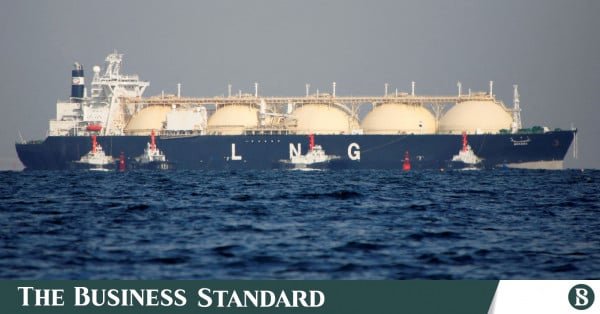
File of an LNG vessel. Photo: Reuters
“>

File of an LNG vessel. Photo: Reuters
US companies are very interested in building more floating storage and regasification units (FSRUs) in Bangladesh, US Ambassador to Bangladesh Brent T Christensen told Commerce Minister Khandakar Abdul Muktadir.
The ambassador made the remarks during a meeting with the commerce minister at the Federation of Bangladesh Chambers of Commerce and Industry office in Dhaka today (7 September), as the government moves to give a contract to a Chinese company to build the third FSRU.
FSRU is a specialised vessel or offshore facility that stores liquefied natural gas and converts it back into a usable gaseous state.

The Economic Affairs Committee of the Cabinet has given in-principle approval to China National Energy Engineering and Construction Ltd to establish the terminal under a government-to-government arrangement.
US Ambassador to Bangladesh Brent T Christensen meets Commerce Minister Khandaker Abdul Muktadir at the Federation of Bangladesh Chambers of Commerce and Industry office in Dhaka on 7 September 2026. Photo: PID
“>

US Ambassador to Bangladesh Brent T Christensen meets Commerce Minister Khandaker Abdul Muktadir at the Federation of Bangladesh Chambers of Commerce and Industry office in Dhaka on 7 September 2026. Photo: PID
Christensen said a transparent and competitive environment for major infrastructure projects, including FSRU, would boost foreign investors’ confidence.
He also welcomed Bangladesh’s long-term LNG import agreement with US-based Gunvor Group, calling it a positive development.
In response, Muktadir welcomed US investors and said American companies would receive the highest consideration if they could demonstrate their ability to supply an FSRU within the shortest possible timeframe.
The US ambassador and the commerce minister also discussed Bangladesh’s import policy.
Christensen said the new policy included several positive changes, although some provisions could be made more business-friendly.
Muktadir said the import policy was a continuing process and necessary reforms were being reviewed regularly in line with market conditions and economic realities.
The minister also highlighted the removal of the previous requirement for foreign companies to appoint local agents when supplying strategic equipment.
He said allowing government agencies to deal directly with manufacturers had increased transparency in procurement and reduced the influence of intermediaries.
According to the Commerce Ministry, the meeting also discussed increasing US investment, ensuring transparency in major infrastructure projects, improving the business environment, expanding bilateral trade and strengthening energy-sector cooperation.
Both sides expressed optimism that regular discussions would further strengthen commercial relations between Bangladesh and the United States.
Bangladesh currently has two floating LNG terminals. One is owned and operated by US-based Excelerate Energy, while the other is owned or operated by local conglomerate Summit Group.
The government has initiated efforts to establish a third terminal, with several domestic and foreign companies showing interest. The Chinese engineering firm has proposed constructing an offshore LNG terminal at Kutubjom in Moheshkhali under a build-own-operate model.
Earlier, Summit signed the agreement with the government in March 2024 during the previous Awami League regime. The interim government later cancelled it.
Meanwhile, Summit has urged Petrobangla to reconsider the cancellation of its agreement to build another FSRU.
Summit has claimed that reinstating its project could save Bangladesh $1.10 billion compared with the FSRU proposed by the Chinese firm. Summit sent a letter to Petrobangla on 6 September seeking reconsideration of the cancellation.
About The Author