There is little relief, whether from locally produced or imported goods. And the pressure extends well beyond food, which already accounts for the largest share of spending by low-income households
From food to fuel, transport to utilities, the price shock is coming from all fronts. Low- and limited-income households are bearing the brunt, struggling to meet daily needs as their purchasing power shrinks.
Data compiled by the state-run Trading Corporation of Bangladesh (TCB) shows how sharply the cost of everyday necessities has risen. In the six months since the BNP government took office, prices of most essentials sold in kitchen and grocery markets have increased, with only a few declining and many remaining unchanged.
Infograph: TBS
“>

Infograph: TBS
There is little relief, whether from locally produced or imported goods. And the pressure extends well beyond food, which already accounts for the largest share of spending by low-income households.
The non-food inflation data from the Bangladesh Bureau of Statistics (BBS) tells the rest of the story.

Overall inflation, which surged following the Russia-Ukraine war, has remained stubbornly high, although it fell below 9% last month.
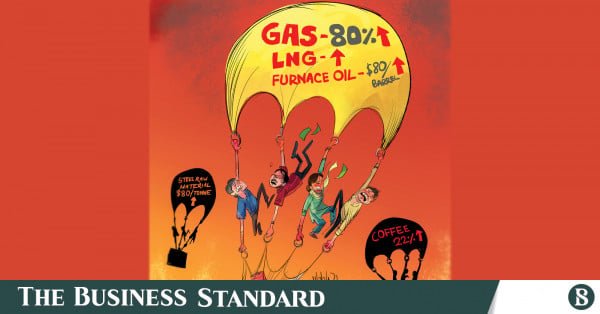
A prolonged foreign exchange squeeze has added another layer of pressure. The dollar now costs around Tk123, compared with Tk86 before the sharp depreciation of the taka, making imports roughly Tk37 more expensive per dollar. The impact is passed on to consumers, while industries that rely heavily on imported raw materials face an even larger cost burden.
The US-Israel war on Iran has delivered another shock, disrupting Bangladesh’s access to its key source of oil and gas and forcing the country to turn to more expensive alternatives. Higher fuel and energy costs are feeding into utility bills, transport fares and factory production costs, further squeezing household budgets.
The result is a cost-of-living crisis increasingly beyond the control of ordinary people, with low- and middle-income households among the worst hit as they struggle to make ends meet.
“I am not satisfied with the current cost of living and commodity prices.”
Khandakar Abdul Muktadir, Commerce Minister
The commerce minister has acknowledged the pressure, saying he is not satisfied with the current price situation.
TCB’s price data captures the widening gap between household needs and purchasing power. Its subsidised truck sales offer some relief, but limited supplies often leave people waiting in long queues. Initiatives such as the Family Card and Farmer Card are welcome, but both remain at an early stage and have yet to provide broad-based relief.
Infograph: TBS
“>

Infograph: TBS
Inflation eases, but consumers still feel the pinch
When the BNP government came to power after a landslide victory last February, inflation had risen to 9.13% amid the approaching Ramadan, Eid-driven shopping and the outgoing government’s uncontrolled market management. Although inflation has since eased from that level, helped by tariff cuts on some products and increased supplies of newly harvested crops, consumers still cannot reconcile the official figures with what they experience when shopping in the market.
Although rice prices have remained stable during the BNP government’s six months in office, the prices of other essential commodities have risen. After taking office, the BNP government increased fuel and electricity prices to cope with the heavy burden of subsidies. This has raised production and transport costs for both food and non-food items, pushing up retail prices. As a result, the cost of living has also increased.
TCB collects prices from various markets across Dhaka every day and publishes retail prices of essential commodities. Its data show that, compared with February, prices of coarse and fine rice have remained stable, while the price of medium-quality rice has declined slightly.
However, prices of various food items, including edible oil, salt, flour, lentils, potatoes, garlic, eggs and powdered milk, have increased during the period. Over the past six months, prices of all types of fresh vegetables have also risen, as the season shifted naturally from winter to the monsoon.
What economists say
Economists say that rising LPG and electricity prices in the months following the outbreak of the Middle East conflict in February have disrupted the monthly budgets of low-income households. As a result, although the inflation rate eased somewhat in July, people are still having to spend more than they did in February on most goods and services.
They also point out that, during the BNP government’s tenure, foreign exchange reserves have increased as remittance inflows grew. Yet inflation and commodity prices have not fallen to the desired levels despite a relatively stable exchange rate. Economists attribute this to the Middle East conflict and the government’s expansionary fiscal and monetary policies.
They also cite the slow implementation of ADP, along with stagnant private-sector investment, as factors behind the lack of growth in employment and income and the failure to bring relief to household budgets.
Although foreign exchange reserves have increased and the exchange rate has remained stable during the BNP government’s tenure, rising fuel prices amid the Middle East conflict have had some impact on the market, said Zahid Hussain, former lead economist at the World Bank’s Dhaka office.
He said the government is pursuing fiscal and monetary policies that are not conducive to bringing inflation under control. Before inflation has been brought down, the government is already adopting expansionary fiscal and monetary policies, including cutting interest rates, to boost GDP growth, he said.
Fahmida Khatun, executive director of the Centre for Policy Dialogue, said monetary policy is not working to control inflation. At the same time, she said, the government’s policies are conflicting with one another.
Economists fear that several initiatives taken by the new government could further fuel inflation.
According to them, while Bangladesh Bank is announcing a contractionary monetary policy, efforts are simultaneously being made to increase money supply in the market by lowering lending rates. At the same time, the government has created a Tk60,000 crore fund to revive closed factories, is moving to implement an expansionary budget and is injecting capital into banks — measures that could pose major obstacles to bringing inflation under control.
Commerce minister not satisfied
Commerce Minister Khandakar Abdul Muktadir is also not satisfied with the cost of living and commodity price situation under the BNP government.
Responding to questions from journalists in Dhaka yesterday, he said, “I am not satisfied with the current cost of living and commodity prices. However, reducing prices is not simply a matter of market monitoring. It is linked to factors such as fuel and electricity prices, borrowing costs, productivity, transport and infrastructure.”
The commerce minister said logistics costs in Bangladesh are much higher than the international average. High transportation costs were feeding into commodity prices, he said. Ensuring better connectivity, uninterrupted and affordable energy, and an efficient supply chain would create scope for reducing prices.
Urging people not to expect immediate results in bringing down commodity prices, he said developing the necessary infrastructure and energy capacity would take time. The government is working to ensure new LNG infrastructure, adequate gas supplies and uninterrupted operation of power plants, the minister added.
About The Author