High bids, global inflation and currency shifts drive revision
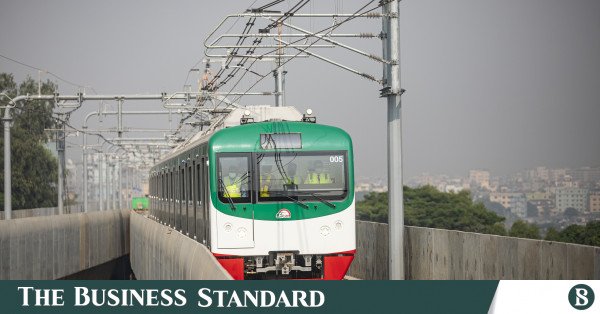
Photo: Mumit M/TBS
“>

Photo: Mumit M/TBS
The cost of MRT Line-5 Northern has been proposed to rise 125.98% to Tk93,190.96 crore, following a similar proposal to increase the cost of another Japanese-funded metro project, MRT Line-1, by around 130%.
Infographic: TBS
“>

Infographic: TBS
Dhaka Mass Transit Company Limited (DMTCL), the project’s implementing agency, prepared the first revised development project proposal, which the Road Transport and Highways Division sent to the Planning Commission this week for approval, officials at the Planning Commission and DMTCL said.
Approved in 2019, MRT-5 Northern was originally estimated to cost Tk41,238.54 crore. The revision would add Tk51,952.42 crore to the project cost.

Cost doubles as deadline slips
Under the revised proposal, the government-funded portion is set to increase 100%, from Tk12,121.50 crore to Tk24,259.72 crore.
The project assistance component is proposed to rise 137%, from Tk29,117 crore to Tk68,931.24 crore.
The original project targeted completion by 2028. Under the new proposal, the project period will run until 2034, including a one-year defect liability period.
DMTCL plans to begin passenger operations on the route in January 2033.
Officials at the Planning Commission and DMTCL said the revision followed substantially higher bids for different contract packages, domestic and global inflation, foreign exchange changes and other market conditions.
Procurement for several major packages also remained stalled for around one and a half years after contractors submitted bids significantly above earlier estimates, according to DMTCL officials.
Bids far exceed earlier estimates
The scale of the increase is evident in two major underground construction packages (CP).
Under CP-05, covering underground stations and the main line from east of Mirpur-1 station to Kachukhet, the original DPP estimated the cost at Tk3,442.71 crore.
The project consultant later estimated the package at Tk5,212.60 crore. When tenders were invited, the lowest bid, submitted by SLTM of Japan, came in at Tk11,177.67 crore – more than three times the original estimate.
A similar rise was seen under CP-06, covering underground stations and the main line from east of Kachukhet station to the Bhatara transition section.
Its original DPP estimate was Tk4,364.75 crore, while the consultant later estimated the cost at Tk6,126.30 crore. The lowest bid, submitted by Taisei-Samsung JV, stood at Tk15,527.02 crore.
DMTCL officials said similarly high bids were received for other construction packages, contributing to the overall revision.
Project Director Abdul Matin Chowdhury declined to comment when asked about the proposed cost increase.
Currency depreciation adds to costs
DMTCL also cited changes in foreign exchange rates as another major reason for the escalation.
The original DPP used an exchange rate of $1 to Tk84.50, while the latest RDPP workbook uses $1 to Tk123.82 based on the Bangladesh Bank rate on 30 July 2026.
That represents a 46.53% depreciation of the taka against the dollar compared with the rate used when the project was originally approved.
DMTCL sources said the project includes imported rolling stock, railway and electromechanical systems, consultancy services and other foreign-currency expenditure. Exchange-rate changes and global inflation have therefore increased their cost in taka.
Limited competition raises concerns
Stakeholders familiar with the project said conditions attached to the Japanese financing require Japanese consultants to be appointed.
They said technical specifications and construction methods used for some packages have also effectively narrowed the pool of contractors capable of participating, limiting competition despite the tenders being formally open.
Officials said differences between DMTCL and Japan International Cooperation Agency, or Jica, over the high bids continued for several months.
The Bangladesh side favoured cancelling the existing tenders and seeking fresh international competitive bids, while Jica maintained that the tender evaluation followed its procurement guidelines and that higher costs reflected global inflation and risks associated with underground construction.
Buet Civil Engineering Professor Md Hadiuzzaman said metro tendering was increasingly becoming limited because project designs and construction requirements often involve specialised technologies and methods available to a restricted group of contractors.
This, he said, reduces genuine competition.
Experts call for comparison
Hadiuzzaman said construction costs and contractor selection should be compared across metro projects being developed in Dhaka under different financing arrangements.
Citing MRT Line-5 Southern, which is being developed with Asian Development Bank financing, he said its underground packages could be compared with MRT-5 Northern and MRT-1 once tender prices become available.
“Such a comparison would help us understand whether the cost of underground metro construction in Dhaka is reasonable and whether the financing and procurement arrangements are influencing the prices,” he said.
He also warned that the financial burden would not end with construction. “Underground metro systems require substantial spending on ventilation, lighting and other electrical and mechanical systems,” Hadiuzzaman said.
Buet Civil Engineering Professor Shamsul Hoque also raised concerns over the increase, saying expenditure determined without sufficient competition could face questions over its justification.
“The revised figures are still estimates, and the costs may rise further,” he said, stressing the need for international benchmarking and comparison with similar projects.
High construction costs would also create longer-term pressure, Hoque said, as the government would eventually have to bear the infrastructure’s operation and maintenance expenses.
20km route with 14 stations
MRT-5 Northern will run about 20km from Hemayetpur in Savar to Bhatara, with 13.5km underground and 6.5km elevated.
The route will have 14 stations – nine underground and five elevated.
The project is divided into 10 contract packages, CP-01 to CP-10. Land acquisition for the Hemayetpur depot has been completed and land development is under way, while construction, tender evaluation and negotiations for different packages are at various stages.
About The Author