Industries report 35-40% output decline.
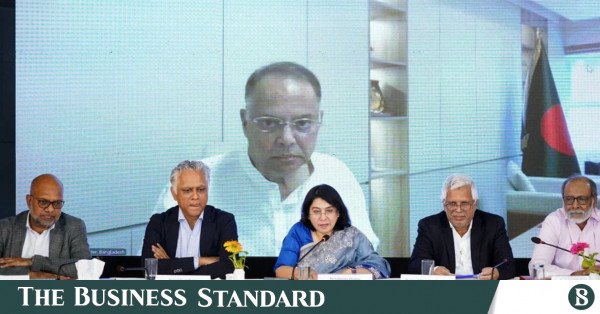
CPD Executive Director Fahmida Khatun speaks at a discussion on Bangladesh’s energy crisis in Dhaka today. Photo: Collected
“>

CPD Executive Director Fahmida Khatun speaks at a discussion on Bangladesh’s energy crisis in Dhaka today. Photo: Collected
Experts have urged the government to pursue long-term structural reforms to resolve Bangladesh’s energy crisis as severe gas and power shortages disrupt industrial production and threaten export orders.
Speaking at a programme titled “Navigating Bangladesh’s Energy Crisis: Immediate Priorities and the Path to a Sustainable Energy Future,” organised by the Centre for Policy Dialogue, at BRAC Centre Inn in Dhaka today (13 August), economists and energy experts advocated for a 10-year integrated strategy to resolve the persisting energy crisis.
Bangladesh Chamber of Industries President Anwar Ul Alam Chowdhury (Parvez) said manufacturers are struggling to maintain production amid severe shortages of gas and electricity, with industrial output falling by 35-40%.

He said many businesses are also at risk of defaulting on bank loans despite paying high utility bills.
Parvez called for gas supplies to industries to be given top priority and urged the government to introduce an emergency protection or “rescue package” to safeguard businesses and employment.
Addressing as chief guest, Power, Energy and Mineral Resources Minister Iqbal Hasan Mahmood said domestic gas production could not be increased suddenly and LNG could not be unloaded and supplied to the national grid until the affected floating storage and regasification unit resumes operations.
“Now, apart from counting the days and the engineers working at the FSRU, there is not much I can do,” he said.
The minister said the government could focus on managing load shedding and ensuring gas supplies to industries while the affected FSRU remains out of operation.
Foqoruddin Al Kabir, senior research fellow at CPD, said the energy crisis had become severe mainly because of excessive dependence on imports and structural weaknesses in the energy sector.
Around 84% of Bangladesh’s electricity currently comes from fossil fuels, while renewable energy accounts for only 4.5%, he said.
“This is increasing pressure on imports while also putting pressure on foreign exchange reserves,” he said.
CPD recommended urgent exploration for domestic gas, greater use of solar and other renewable energy sources, and the development of strategic fuel reserves.
It also called for specific policies to manage fluctuations in imported energy prices and protect low-income consumers.
CPD Executive Director Fahmida Khatun, who chaired the programme, said temporary measures would not provide a sustainable solution to the power and energy crisis.
She called for a 10-year integrated policy and institutional capacity-building programme, saying the crisis had deepened because of the absence of proper market-based pricing and targeted subsidies.
“The government must take immediate and visible steps to address the lack of good governance and reforms in the past,” she said, stressing the need to restore stability for industries, agriculture and consumers.
Call for LNG, renewable energy investment
David Hasanat, president of the Bangladesh Independent Power Producers Association, said a large number of gas-fired power plants were being forced to shut down because of the severe gas shortage.
He said declining domestic gas production is aggravating the crisis, while constructing a new floating LNG terminal would take considerable time.
He therefore called for a land-based LNG terminal to address the immediate crisis and strengthen long-term energy security.
Mustafa Al Mahmud, president of the Bangladesh Sustainable and Renewable Energy Association, urged the government to accelerate renewable energy adoption.
He called for simpler port clearance procedures and the removal of customs and administrative barriers to facilitate the rapid import of renewable energy equipment.
Energy expert Professor Ijaz Hossain blamed excessive social commitments, the lack of an appropriate pricing policy and system losses for the prolonged energy crisis.
He called for realistic energy pricing, stronger measures against theft and greater preparedness among industries for future supply disruptions.
Priority in energy distribution
Syed Nasim Manzur, managing director of Apex Footwear Ltd, called for clear government prioritisation of industries in energy distribution.
“The country’s industrial production and export capacity is facing serious risks due to the fuel crisis. To deal with this crisis, we need a reliable supply of quality electricity and gas,” he said.
He also called for a specific load-shedding schedule, reduced system losses, tax exemptions for solar storage systems and priority for industries in energy distribution.
About The Author