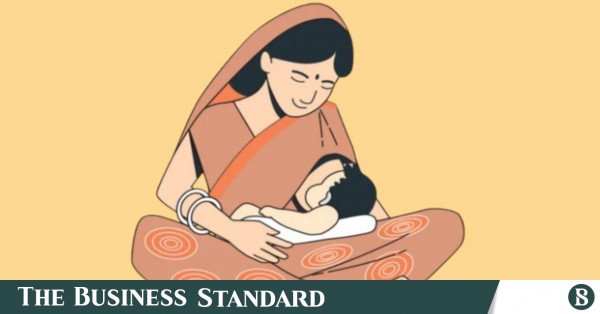
WHO and UNICEF call for strengthened action to protect, promote and support breastfeeding.
Representational Image/TBS
“>

Representational Image/TBS
Exclusive breastfeeding among infants under six months fell to 56.6% in 2025 from 62.6% in 2019, while the rate of breastfeeding initiation within one hour of birth dropped sharply to 30.4% from 46.6%, according to the Bangladesh Multiple Indicator Cluster Survey (MICS) 2025.
The World Health Organization (WHO) and UNICEF, in a joint statement today (11 August), urged stronger action to protect, promote and support breastfeeding, warning that the latest figures underscore the urgent need to improve support for mothers and families.
“Breastfeeding gives every child the healthiest and most sustainable start in life,” said Gillian Mellsop, UNICEF Representative ad interim to Bangladesh, and Dr Ahmed Jamsheed Mohamed, WHO Representative to Bangladesh.

They said breast milk provides all the nutrients infants need during their first six months, protects against infectious diseases, strengthens immunity and supports healthy growth and brain development. It also reduces mothers’ risks of breast and ovarian cancers and type 2 diabetes.
The organisations said the decline comes at a critical time and highlights the need for greater support for mothers during pregnancy, childbirth and the postnatal period.
While breastfeeding is natural, “it is not always easy”, they said, noting that many mothers lack adequate counselling, encouragement and practical support. Working mothers often return to work without sufficient maternity protection or access to breastfeeding-friendly workplaces, while families remain exposed to inappropriate marketing of breast-milk substitutes.
These barriers can become even more severe during emergencies and humanitarian crises, WHO and UNICEF said.
This year’s World Breastfeeding Week theme “Breastfeeding for a Sustainable Start in Life: Strengthen What Works” underscores the need to scale up proven interventions rather than develop new solutions, they said.
The organisations called for stronger health systems, skilled health workers and community support, as well as expansion of the baby-friendly hospital initiative, maternity protection and breastfeeding-friendly workplaces.
They also urged full implementation of the International Code of Marketing of Breast-milk Substitutes, including measures to prevent inappropriate marketing through digital and social media.
According to WHO and UNICEF, every $1 invested in breastfeeding generates an estimated $59 in economic returns through lower healthcare costs, improved cognitive development, higher educational attainment and increased lifetime earnings.
They called on the government, private sector, development partners, health professionals, employers and communities to strengthen breastfeeding support beyond World Breastfeeding Week 2026 and integrate it into health, nutrition and social protection programmes, particularly for vulnerable mothers.
The organisations also stressed the need for stronger data, monitoring and research to track progress and guide evidence-based action.
“Protecting, promoting and supporting breastfeeding is one of the smartest investments Bangladesh can make in its children,” the statement said, noting that breastfeeding saves lives, improves health and nutrition, strengthens learning and human capital, and contributes to sustainable development.
WHO and UNICEF in Bangladesh said they would continue working with the government and partners to strengthen health systems, empower families and create an enabling environment for mothers to breastfeed and children to survive, grow and thrive.
About The Author