The company’s two associate entities – Delta Life Sciences PLC and Delta API Ltd – plan to invest a total of $100 million in the long term. The first phase will involve an investment of approximately $43 million
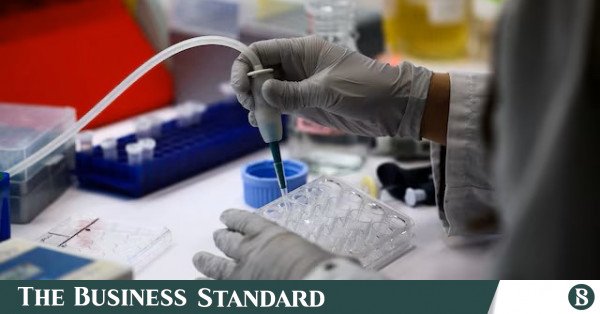
A researcher uses a pipette to transfer a sample into a microtube in this illustration. REUTERS/Gonzalo Fuentes/FILE PHOTO
“>

A researcher uses a pipette to transfer a sample into a microtube in this illustration. REUTERS/Gonzalo Fuentes/FILE PHOTO
Highlights:
- Delta Pharma targets commercial API production by 2029
- Delta entities plan $100 million long-term investment
- First-phase investment estimated at approximately $43 million
- Project spans 42 acres in Mirsarai economic zone
- Bangladesh imports 85%-95% of pharmaceutical raw materials
- Local API production will strengthen post-LDC competitiveness
Delta Pharma has begun work to establish an active pharmaceutical ingredient manufacturing complex at the National Special Economic Zone in Mirsarai of Chattogram, aiming to begin commercial production by 2029 as Bangladesh seeks to reduce its dependence on imported pharmaceutical raw materials.
The company’s two associate entities – Delta Life Sciences PLC and Delta API Ltd – plan to invest a total of $100 million in the long term. The first phase will involve an investment of approximately $43 million.

The entities have secured a combined 42 acres of land from the Bangladesh Economic Zones Authority (Beza). Delta Life Sciences received an initial 30-acre allocation in 2025, while Delta API Ltd was allotted an additional 12 acres on 5 July this year.
Infograph: TBS
“>

Infograph: TBS
Under the project, Delta Life Sciences will establish a biopharmaceutical fill-finish and formulation facility [a specialised, highly regulated cleanroom environment where purified bulk drug substances are mixed], an oncology unit for injectable and oral solid-dosage medicines, an herbal, nutraceutical, and natural medicine unit, an AI-driven manufacturing unit, and a modern research and development centre.
The facilities will manufacture anti-cancer medicines, monoclonal antibodies, erythropoietin, filgrastim, topical creams and ointments, alongside herbal and nutraceutical products.
Speaking to The Business Standard, Delta Pharma Managing Director Dr Md Zakir Hossain said the company formally took possession of the land in November 2025 before starting digital surveys and soil testing.
Before constructing buildings, roads or boundary walls, deep piling is required. Continuous rainfall has delayed the completion of the soil tests, he said.
He explained that after the soil test, the company must complete several planning stages, including approval of the boundary wall design, preparation of the site master plan and architectural and structural designs.
“These planning activities usually take one to one-and-a-half years. Construction will begin after that, while building and commissioning a modern pharmaceutical factory requires another two-and-a-half to three years. Even though the project has started, commercial production before 2029 will not be possible,” he added.
Calling the active pharmaceutical ingredient industry a capital-intensive sector, he said, “We need uninterrupted supplies of gas, water and electricity once production begins. We also expect the Bangladesh Economic Zones Authority to swiftly implement the infrastructure facilities it has committed to providing in the economic zone.”
API is the key active component in medicines, while excipients are the inactive substances used in formulations. Bangladesh currently imports the vast majority of APIs used by its pharmaceutical industry.
Delta API Ltd will build its dedicated API manufacturing plant on the 12-acre site with an investment of about $12.3 million. The API plant will produce pharmaceutical raw materials.
“Bangladesh now exports finished pharmaceutical products [medicines that have finished all steps of making and packing and ready for use] to around 152 to 155 countries, while locally manufactured medicines meet nearly 98% of domestic demand. To sustain this success, we must strengthen the API sector,” he said.
“At present, 85% to 95% of pharmaceutical raw materials are imported. After Bangladesh graduates from the Least Developed Country category, the existing import-related benefits will gradually diminish, making local API production increasingly important,” he said.
Zakir stressed the need to strengthen security and law and order in the project area, along with ensuring regular monitoring, so that investors can carry out their operations without disruption.
The pharmaceutical industry is one of eight priority sectors identified by the Bangladesh Investment Development Authority for attracting foreign direct investment.
Bangladesh exported pharmaceutical products worth $238.49 million in FY26, up from $213 million in the previous fiscal year. The government believes the sector has strong potential for further export growth, while industry insiders say new investments will enhance Bangladesh’s competitiveness in high-value and specialised medicines.
Bangladesh Economic Zones Authority and Bangladesh Investment Development Authority Executive Chairman Ashik Chowdhury told this newspaper that pharmaceuticals remain a strategic priority for the government.
“We want to expand exports alongside meeting domestic demand. It is encouraging to see healthcare manufacturers moving into production. Delta Pharma has already started work at the national economic zone, and we will ensure the required infrastructure support is provided as quickly as possible,” he said.
The national economic zone, the country’s largest planned industrial zone, is being developed along a 25-kilometre coastal stretch in Mirsarai with integrated industrial, residential and urban facilities.
About The Author