Highlights:
- Daily dengue admissions exceed 500 nationwide, rising sharply since late July
- Hospitals prepare dedicated dengue wards as patient numbers continue increasing
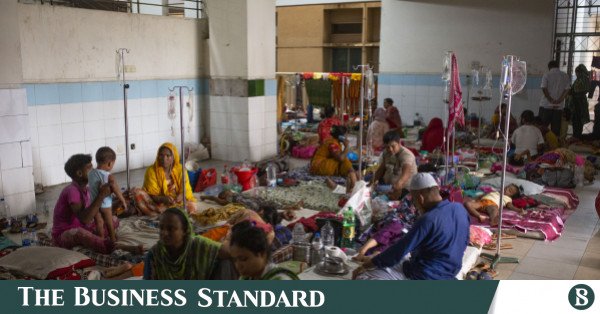
- Some hospitals face bed shortages, treating patients on floors
- Schoolchildren hardest hit; severe pediatric dengue cases increasing
- Bangladesh records 17,214 dengue hospitalisations and 59 deaths this year
- Health officials urge early testing, treatment, and stronger mosquito prevention
Dengue admissions have surged past 500 a day nationwide, prompting many hospitals to prepare for dedicated wards as patient numbers rise steadily and bed shortages begin to emerge at some facilities.
Hospitals across the country, including in Dhaka, reported a sharp increase in dengue admissions over the past week.

An analysis of Directorate General of Health Services (DGHS) data shows that average daily dengue admissions have climbed from around 200-300 just two weeks ago to more than 500.
In the 24 hours until 8am yesterday, hospitals admitted 530 dengue patients nationwide, following 580 admissions the previous day. On 27 July, daily dengue hospitalisations reached 546. Since then, the number of cases has been rising steadily.
Dr Mirza Md Ziaul Islam, director of Bangladesh Shishu Hospital and Institute, said the hospital was still treating patients in its dengue corner but was prepared to expand it into a dedicated ward if necessary.
“We are seeing a steady increase in dengue patients. Several children with severe dengue are currently being treated in the ICU,” he told TBS.
He said the rise was also evident in private clinics, noting that he had treated six dengue patients at his chamber in a single day.
“We fear the outbreak could become more severe this year. Continuous rainfall could further worsen the situation,” he added.
Bed shortages at hospital
Shaheed Suhrawardy Medical College Hospital currently has the highest number of admitted dengue patients and has already opened separate dengue wards for male and female patients.
The hospital is admitting around 15-20 new dengue patients daily. With the wards full, some patients are now being treated on the floor.
Dr Nanda Dulal Saha, director (in-charge) of the hospital, said it currently has 170 dengue patients in beds and another 25 receiving treatment on the floor.
“Admissions have been increasing gradually over the past week. Patients of all age groups are being admitted, including around 30 children. About 50% of our dengue patients are Mohammadpur residents,” he said.
According to the DGHS, 1,321 dengue patients are currently undergoing treatment in hospitals nationwide. Of them, 218 are admitted to government hospitals in Dhaka, 76 to private hospitals in the capital and 1,027 to hospitals outside Dhaka.
Health officials, however, said the official figures do not capture all cases, as the DGHS compiles data only up to 8:00am each day and from a limited number of reporting hospitals.
Dr Abdul Wahab, deputy director of Islami Bank Hospital in Mirpur, said the hospital was also experiencing mounting pressure.
“There are no vacant beds at present, and we receive requests for admission every day. We have not yet opened a separate dengue ward, but if admissions continue to rise, we will do so,” he said.
Hospitals on alert
Dr Nurul Islam, director (hospitals and clinics) at the DGHS, said all hospitals had been instructed to prepare for a seasonal rise in dengue cases.
“Necessary medicines and medical supplies are being stocked. If the situation worsens, additional beds will be arranged and separate dengue wards will be opened where needed,” he said.
He also urged people to seek medical attention and undergo dengue testing even if they had a fever for only one or two days.
Field-level health workers have also been instructed to intensify public awareness campaigns, he added.
Schoolchildren most affected
Doctors say school-going children appear to be the hardest-hit age group so far this year.
Dr Ziaul urged parents to ensure children wear full-sleeved clothing and socks when going to school, sleep under mosquito nets during daytime naps and eliminate stagnant water around homes, including in flower pots, discarded tyres and other containers.
“Any fever during this period should be taken seriously. Parents should seek medical advice immediately and get a dengue test done. If necessary, children should be taken to a paediatric specialist without delay,” he said.
According to DGHS data, 17,214 people have been hospitalised with dengue and 59 have died from the disease so far this year. Of the deaths, 36 occurred in July and five in August (in 4 days).
Among the fatalities are three children aged up to five years and six aged 6-15 years. So far, 937 children aged 0-5 years and 2,027 aged 6-15 years have been hospitalised with dengue.
About The Author