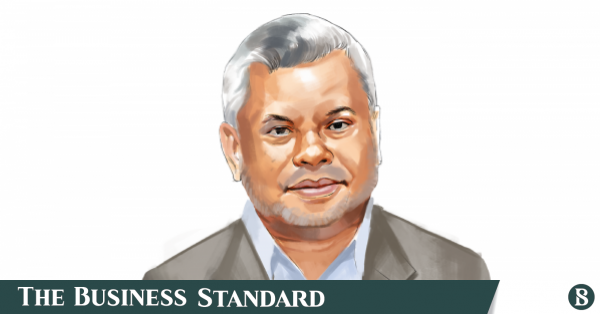
Bureaucratic harassment, customs delays, and rising port tariffs are among the biggest obstacles to Bangladesh’s trade and industrial growth, according to Mohammed Amirul Haque, the newly elected Chittagong Chamber of Commerce and Industry (CCCI). In an interview with The Business Standard’s Chattogram Bureau Chief Shamsuddin Illius, he outlines the reforms needed to restore Bangladesh’s trade competitiveness.
How do you see your role as CCCI president at this challenging time?
I never imagined taking office at such a challenging time. I am encouraged by the reform-minded approach of the finance and planning minister, who is from Chattogram, as well as the commerce, energy and land ministers.

But the lower tiers of the administration remain unchanged, and that is where implementation often breaks down. No matter how committed ministers are, reforms cannot succeed if officials continue with the same old practices.
How do you assess govt’s intentions on economic reform?
The prime minister and the ministers responsible for commerce, planning, finance, land, and energy appear committed to reforms. The real test, however, is implementation. I believe there remains a wide gap between policy promises and the realities on the ground.
What difficulties are businesses facing at Customs and Chattogram port?
We are repeatedly assured that these problems will be resolved, but little changes. Customs assessments take eight to 10 days, while port demurrage starts after just four days, meaning businesses begin paying penalties from the fifth day.
These delays significantly increase the cost of doing business. Chattogram port already earns around Tk6,000 crore a year, yet tariffs have risen by more than 400% without a clear justification. Port charges should be based on actual costs, but businesses are never shown how those costs are calculated.
No matter how committed ministers are, reforms cannot succeed if officials continue with the same old practices.
A modern port cannot be run without professional expertise. It needs chartered accountants, supply chain specialists, management professionals and other qualified experts, but such expertise is largely absent from the current system.
There is also a serious lack of consultation. The port authorities rarely engage the FBCCI, the CCCI, International Chamber of Commerce or even the BGMEA, despite the apparel sector generating around $48 billion in exports.
If ministers can meet stakeholders, why can’t port officials do the same? Entering the port now feels more restrictive than entering a cantonment. Business representatives often cannot meet the chairman, while decisions are imposed under labels such as “Act of God” without adequate explanation or legal basis.
Businesses allege that Customs officials do not comply even with court orders. Why?
They appear to believe they are answerable to no one. That is why they often fail to comply even with court orders. Despite numerous contempt-of-court proceedings, goods remain stuck at the port.
More than 90% of the country’s imports and exports pass through Chattogram Customs House, yet assistant revenue officers wield enormous influence. Commissioners come and go, but these officials remain. Their attitude towards businesspeople is often hostile. They are heinous to businesspeople and anyone who criticises the NBR risks facing obstacles in doing business.
What specific reforms do you propose?
The government must overhaul the entire system and decide whether Chattogram Custom House should be fully automated or restructured under a different model.
In Pakistan, customs assessments for Karachi are conducted centrally from Islamabad, with consignments assessed remotely, eliminating opportunities for undue influence. Similar reforms here would face resistance from vested interests.
I worked on automating Chattogram Customs House in 2007-08 and paid a heavy price for challenging the status quo. I have also proposed a “one-page licence” combining the trade licence with import and export certificates, so businesses no longer have to visit multiple offices for separate approvals.
What immediate steps should the govt take?
Policymakers should engage regularly with business leaders and listen to their concerns firsthand. I saw this in Singapore, where Lee Kuan Yew regularly met businesspeople over breakfast. Malaysia’s Mahathir Mohamad and India’s Manmohan Singh also consulted the private sector while pursuing major economic reforms.
If the government wants to transform the economy, it must hear directly from those who drive it. Businesspeople understand the challenges on the ground better than anyone else.
About The Author