The chamber says heavy dependence on imported industrial chemicals, tariff complexities and logistical bottlenecks continue to undermine the country’s export-oriented industries.
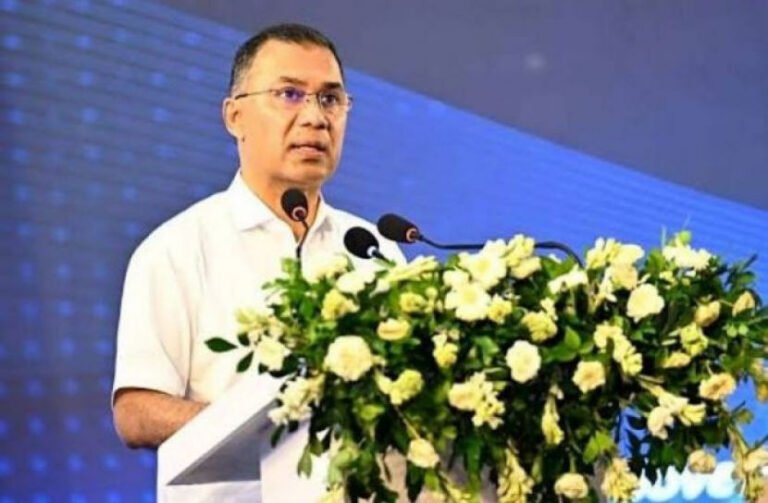
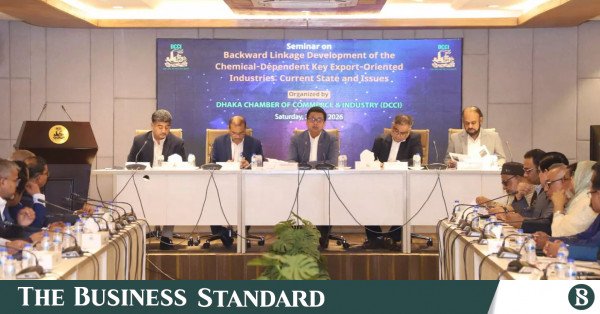
DCCI President Taskeen Ahmed speaks at a seminar on developing the chemical backward linkage industry for Bangladesh’s key export-oriented sectors at the chamber’s auditorium in Dhaka today. Photo: Courtesy
“>

DCCI President Taskeen Ahmed speaks at a seminar on developing the chemical backward linkage industry for Bangladesh’s key export-oriented sectors at the chamber’s auditorium in Dhaka today. Photo: Courtesy
Dhaka Chamber of Commerce and Industry (DCCI) President Taskeen Ahmed today (25 July) called for a comprehensive roadmap to strengthen Bangladesh’s chemical backward linkage industry, saying it is essential to sustain the country’s export competitiveness.
“The export competitiveness of Bangladesh’s RMG, textile, leather and pharmaceutical industries depends on a competitive supply chain of chemical products,” he said at a seminar organised by the DCCI.
Taskeen said Bangladesh’s industrial growth continues to be constrained by heavy reliance on imported dyes, chemicals and specialised industrial raw materials, as well as tariff complexities, lengthy environmental clearance procedures and logistical bottlenecks.

Speaking at the seminar, Bangladesh Institute of Management Director General Md Salim Ullah said the government is revising the National Industrial Policy and suggested the private sector decide whether the chemical backward linkage industry requires a separate policy or a dedicated chapter in the existing one.
He also stressed the need for stronger public-private collaboration to develop a skilled workforce.
Abul Fatah Md Baligur Rahman, member (Development) of the Bangladesh Council of Scientific and Industrial Research, urged closer collaboration between industry and academia and encouraged entrepreneurs to make greater use of the organisation’s research.
During the discussion, Bangladesh Garment Manufacturers and Exporters Association Director Sheikh Hossain Muhammad Mustafiz said uninterrupted energy supply, supportive policies, compliance with international quality standards and dedicated industrial zones are essential for the sector’s growth.
Bangladesh Tanners Association Chairman Md Shaheen Ahamed said the leather industry remains heavily dependent on imported chemicals and called for lower import-stage duties.
National Board of Revenue Second Secretary Suraiya Sultana said tariff rates are being gradually reduced to encourage local chemical production, while the bonded warehouse licensing system has been fully digitised to make it easier for businesses.
About The Author