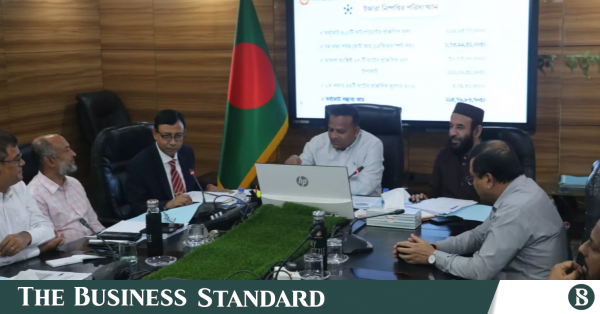
Khalilur Rahman urges collective efforts to ensure the safe, voluntary and dignified repatriation of the Rohingya to Myanmar’s Rakhine State.
Khalilur Rahman addresses the Asean Regional Forum Ministerial Meeting in Manila.Photo:Courtecy
“>

Khalilur Rahman addresses the Asean Regional Forum Ministerial Meeting in Manila.Photo:Courtecy
Foreign Minister Khalilur Rahman today (23 July) reaffirmed Bangladesh’s steadfast commitment to dialogue, multilateralism and a rules-based international order while addressing the 33rd Asean Regional Forum (ARF) Ministerial Meeting in Manila, the Philippines.
He also expressed appreciation for the support extended by participating countries to Bangladesh’s candidature for the presidency of the 81st session of the United Nations General Assembly (UNGA).
The foreign minister observed that the international community is facing unprecedented geopolitical challenges and emphasised that sustained dialogue and diplomacy remain the most effective means of addressing emerging global and regional security concerns.

Calling for restraint in addressing maritime disputes, he urged all states to uphold international law, including the United Nations Convention on the Law of the Sea (UNCLOS), and resolve differences through peaceful dialogue.
Addressing the Rohingya crisis, Khalilur reiterated that Bangladesh has continued to shoulder the humanitarian responsibility of hosting more than 1.3 million forcibly displaced Rohingya from Myanmar for nearly a decade.
He warned that the protracted crisis has given rise to a range of transnational security challenges, including drug trafficking, human trafficking and the illicit flow of arms and weapons across borders.
“The Rohingya are not stateless people by circumstance – they are stateless by design. It is a political failure demanding a political solution,” he said.
The foreign minister called on ARF member states to collectively support efforts to create conditions in Myanmar conducive to the safe, voluntary, dignified and sustainable repatriation of the Rohingya to their homeland in Rakhine State.
On climate-related security challenges, Khalilur noted that Bangladesh, as one of the countries most vulnerable to climate change and natural disasters, remains committed to promoting enhanced regional cooperation in disaster preparedness and early warning systems.
He said Bangladesh, in its capacity as co-chair of the ARF Inter-Sessional Meeting on Disaster Relief, would continue to advocate for strengthening regional resilience under the ARF framework.
The foreign minister also highlighted both the opportunities and risks associated with artificial intelligence and emerging technologies, calling for closer regional cooperation to address cybersecurity threats, disinformation and the misuse of advanced technologies.
He proposed exploring a regional technology governance framework that reflects the region’s unique geopolitical and developmental realities.
Reaffirming Bangladesh’s commitment to strengthened regional cooperation based on mutual respect and shared prosperity, Khalilur said, “Bangladesh will always choose dialogue over division, partnership over polarisation.”
About The Author