Gas supply cut hits households, industries
Representational Image. Photo: Collected
“>

Representational Image. Photo: Collected
Highlights:
- FSRU fault exposes LNG dependence
- Supply shortfall affects industries, power plants, CNG filling stations, households
- Govt unveils plans to reduce LNG import dependence
- Ecnec approves Tk729 crore project for 3 exploration wells
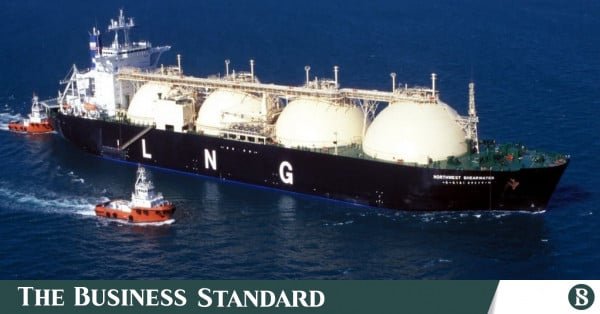
A technical fault at a floating liquefied natural gas terminal off Moheshkhali has cut gas supply to Bangladesh’s national grid by around 450 million cubic feet per day (mmcfd), disrupting households, industries and transport services across the country.
The disruption was triggered by a malfunction at the floating storage and regasification unit operated by the US-based Excelerate Energy during a ship-to-ship LNG transfer operation on Tuesday, according to Petrobangla.

Petrobangla Director (Operations) Engineer Md Rafiqul Islam told The Business Standard today (22 July) that restoring operations at the terminal could take time.
The Energy Division said it was closely monitoring the situation and expected gas supplies to improve once the technical fault at the terminal had been rectified. It also apologised to consumers for the temporary inconvenience caused by the disruption.
Bangladesh’s daily natural gas demand currently stands at around 3,800-4,000 mmcfd, while Petrobangla can supply only 2,500-2,800 mmcfd. Of the total supply, approximately 1,000 mmcfd comes from imported LNG.
Households and businesses affected
The outage has sharply reduced gas pressure in many parts of the country, leaving households unable to cook and forcing industries and power plants to operate under fuel constraints.
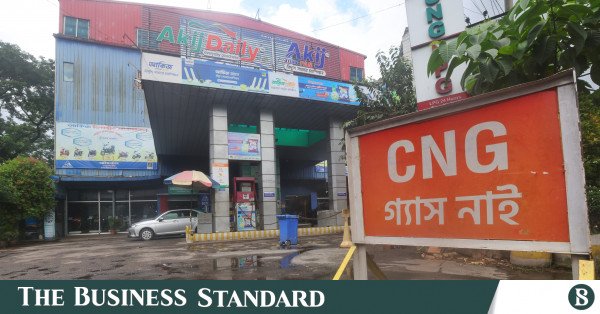
The effects have been particularly visible at compressed natural gas filling stations, where hundreds of vehicles queued for hours as stations struggled to secure adequate supplies. The long queues caused mounting frustration among transport operators and commuters.
Speaking at a press briefing yesterday, Energy and Mineral Resources Division spokesperson Monir Hossain Chowdhury said the fault at one of the country’s floating LNG terminals had temporarily halted gas supply from the facility, reducing gas injection into the national grid by around 450 mmcfd.
“The supply disruption has affected industrial production, electricity generation and CNG refuelling across the country. In several areas, low gas pressure has prevented CNG stations from receiving adequate gas, leading to long queues and temporary public suffering,” he said.
He added that engineers and technical experts were working on an emergency basis to repair the terminal and restore supplies as quickly as possible. In the meantime, authorities are managing the limited gas available to ensure uninterrupted supply to priority consumers.
Govt admits vulnerability
The government acknowledged that, although the terminal malfunction was the immediate cause of the crisis, Bangladesh’s growing dependence on imported LNG has made the national gas supply system increasingly vulnerable to disruptions.
According to the Energy Division, insufficient emphasis on domestic gas exploration and production over the years has significantly increased reliance on imported fuel, meaning that any disruption to import infrastructure can have an immediate nationwide impact.
To reduce that dependence, the government said it has adopted a long-term strategy to increase domestic gas production, including a phased programme to drill 100 wells.
As part of that effort, the Executive Committee of the National Economic Council approved a Tk729 crore project yesterday to drill three exploration wells in Begumganj and Sunamganj.
The government is also seeking local and foreign investment in onshore and offshore gas exploration under revised production-sharing contracts.
New initiatives planned
The Energy Division noted that exploration, drilling, infrastructure development and commercial production are lengthy processes, meaning the country’s structural gas shortage cannot be resolved quickly.
To strengthen long-term energy security, the government announced plans to invite bids for a fourth floating LNG terminal, assess the feasibility of importing LNG from Malaysia using ISO tanks and review pipeline and other transport options for bringing gas from Bhola into the national grid.
Authorities also plan to accelerate drilling and workover programmes at existing gas fields and diversify LNG import sources and supply infrastructure.
About The Author