Violence during election campaigns has stoked fear that the law and order situation may further deteriorate on election day as clashes between rival political parties have already caused injuries and deaths across the country.
As the 13th national parliamentary election and the referendum are less than two weeks away, allegations of corruption between rival supporters and activists, personal attacks, blame-game, are making the electoral environment increasingly uncomfortable and raising questions over electoral culture.
In the first week of campaigning from 22 January, at least 25 clashes were reported nationwide – mostly between BNP and Jamaat-led 11-party supporters – leaving more than 200 people injured and at least one dead.

Police Headquarters data from 12 December to 26 January records 144 election-related violent incidents, including 55 clashes between party supporters, 11 cases of intimidation or aggressive behaviour, six attacks on candidates – two involving illegal firearms – and six cases of direct threats.
A recent police intelligence report also warns that all 300 constituencies face potential unrest due to the presence of illegal firearms. It also flags the risk of disruption through misinformation campaigns on social media and AI-driven platforms.
However, Police tightened security on high-risk polling centers.
The Election Commission and Police Headquarters have identified more than 25,000 high-risk polling centres, of them, 1,614 are in Dhaka.
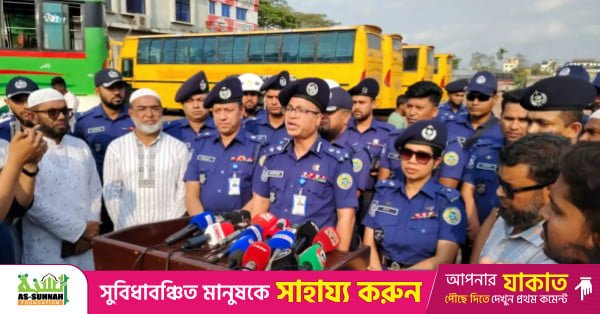
Police sources said 25,500 body-worn cameras and 500 drones will be used at the most vulnerable centres and in total, 943,050 security personnel will be deployed nationwide, including 150,000 police officers, more than 100,000 army personnel and 576,000 Ansar.
Despite these measures, concerns persist.
An additional superintendent of police from the Chattogram Range, speaking anonymously, said available camera coverage amounts to only about half of what is required, while police morale has yet to fully recover, raising concerns over election-day security involvement.
On the overall stability of the election, political leaders criticized the administration’s passive role and urged them to bring those disrupting the peaceful environment under the law.
Javed Rashin, a candidate of Dhaka-9 constituency and Joint Convener of the National Citizen Party (NCP) criticised the administration’s passive role, warning that such inaction is gradually destroying the level playing field of the election.
“Women are being particularly targeted, which is deeply alarming,” he added.
BNP Senior Joint Secretary General Advocate Ruhul Kabir Rizvi said the overall stability of the election depends on the conduct of law enforcement agencies, the government, the Election Commission and the administration.
He also pointed out the lack of goodwill from the interim.
Assistant Secretary General of Jamaat, Ahsanul Mahboob Zubair told TBS that so far, the situation has deteriorated too much.
However, “we believe that the law enforcement agencies and the administration will play a neutral role,” he added.
Meanwhile, security experts are emphasising implementing a coordinated security framework involving all political parties and other stakeholders. Otherwise, the election may face criticism over its ability to be fully free, fair, and acceptable, they warn.
Retired Major General Naim Ashfaq Chowdhury said pre-election instability significantly heightens election-day risks, though not all violence is politically motivated.
“Many incidents stem from personal interests. Security risks are closely linked to social and economic factors,” he said.
He urged law enforcement agencies to be more proactive and to rehearse polling-day operations in advance, saying this would signal to potential saboteurs that disruptions will not be tolerated. He also stressed integrating the judiciary into the security framework, warning that if arrested criminals secure quick bail, disorder will persist.
“Those detained before the election must not be released ahead of polling,” he said, adding that coordinated security measures could ensure a credible and fear-free election.
Inspector General of Police Baharul Alam acknowledged that election-related violence is not new in Bangladesh; however, expressed confidence in voter protection.
“We are prepared for political pressure, vandalism or muscle power and will act using legal tools,” he said, adding that even if voting is suspended at some centres, the election will proceed nationwide.
About The Author