The first budget session of the BNP-led government’s parliament concluded on 15 July amid political confrontation, constitutional disputes, and constituency concerns, with debates overshadowed by these issues.
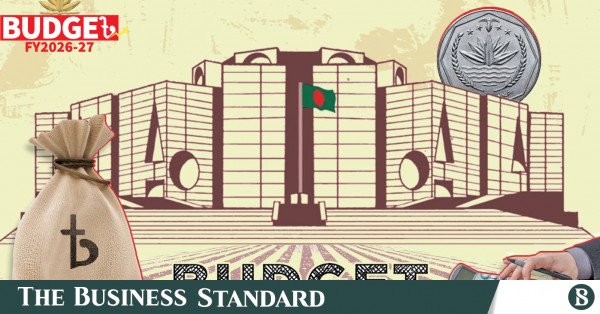
The 39-day second session, which began on 7 June, passed the Tk9.38 lakh crore budget for FY27. But debates focused more on implementation of the July Charter, competing narratives on the Liberation War and the July Uprising, law and order, power shortages, education and local development than on fiscal policy.
During the 26 working days, parliament conducted its regular business, including passing legislation, holding question-and-answer sessions, forming parliamentary committees, and overseeing government accountability.

Finance Minister Amir Khosru Mahmud Chowdhury presented the budget on 11 June, outlining priorities such as curbing inflation, creating jobs, boosting private investment, increasing revenue collection and expanding spending on health, education, agriculture, social protection and infrastructure.
The budget was debated over 14 working days, with 316 lawmakers speaking for a combined 48 hours and 51 minutes. The parliament passed the budget by voice vote on 30 June.
BNP MPs described it as a roadmap for economic recovery, while the opposition criticised its approach to inflation, revenue mobilisation and budget deficit.
Constitutional reform sparks major confrontation
The session’s major political dispute centred on a special parliamentary committee on constitutional amendments.
On 14 June, parliament formed a 12-member committee, leaving five seats vacant for the opposition. Chaired by Home Minister Salahuddin Ahmed, the committee was tasked with preparing draft constitutional amendments to implement commitments under the July Charter.
The government argued that parliamentary amendments were the only constitutional route to implementing the charter. The opposition, however, demanded a separate constitutional reform council, claiming voters had endorsed fundamental constitutional reform rather than partial amendments. Opposition MPs staged a walkout, and the committee was formed without their participation.
Local issues dominate discussions
Although the session centred on the budget, MPs frequently highlighted problems in their constituencies.
One of the most debated issues was power shortages after independent MP Rumeen Farhana claimed rural areas were facing 10 to 12 hours of daily load shedding. Power Minister Iqbal Hasaan Mahmood rejected the allegation, prompting the speaker to urge both sides to rely on verified information.
Lawmakers also raised concerns over roads, healthcare, education, agriculture, electricity and local infrastructure, giving constituency issues a prominent place alongside national economic discussions.
Wider political debates
Debates over the Liberation War, the July uprising and historical narratives repeatedly heated up the parliament. Remarks by ruling party MP and freedom fighter Fazlur Rahman triggered sharp exchanges between treasury and opposition benches, forcing the speaker to intervene and order some comments expunged from parliamentary records.
State-owned mobile operator Teletalk also came under scrutiny. ICT Minister Faqir Mahbub Anam said the government had no plans to sell the company and was instead working to modernise it, while opposition MPs questioned its losses and declining competitiveness.
Education Minister ANM Ehsanul Hoque Milon announced special arrangements for students who missed the HSC examinations and full marks for candidates affected by errors in the Physics first paper examination. The move was welcomed but also prompted questions over the assessment process.
The home minister’s remark that a rise in rape cases did not necessarily indicate an increase in crime also generated widespread debate.
Speaker repeatedly urges decorum
Throughout the session, the speaker and the deputy speaker repeatedly called on lawmakers to maintain parliamentary decorum. Several remarks containing personal attacks or unparliamentary language were expunged.
The speaker also criticised ministers’ absence during debates, reliance on written speeches, failure to answer supplementary questions directly and lawmakers leaving the chamber during discussions.
Legislative business
Despite political tensions, parliament passed 10 government bills during the session. Twenty-five MPs participated in discussions on the supplementary budget.
MPs submitted 715 notices under Rule 71, of which 24 were accepted and 22 discussed. Parliament also received 125 two-minute notices under Rule 71A and disposed of four substantive motions under Rule 131.
Of the 278 questions submitted to the prime minister, 35 were answered, while ministries responded to 3,474 of the 5,031 questions submitted by MPs.
Parliament also formed or reconstituted 11 committees during the session, including the constitutional amendment committee.
Although the parliament passed the government’s record budget and completed its legislative agenda, the session will likely be remembered more for political confrontation, constitutional disputes, constituency concerns and repeated debates over parliamentary conduct than for discussions on economic policy.
About The Author