It says country’s first such plant could save up to Tk15,000 crore annually
Infographics: TBS
“>

Infographics: TBS
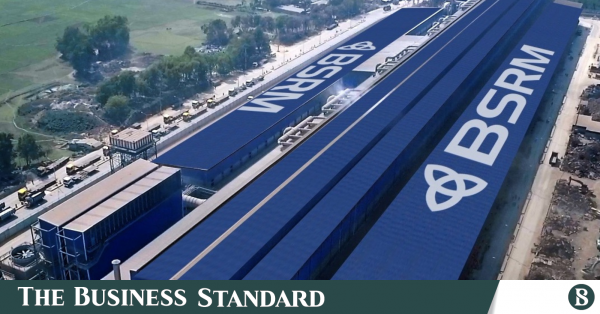
Bangladesh’s largest steelmaker, BSRM, plans to invest approximately Tk10,000 crore to establish the country’s first integrated hot-rolled flat steel manufacturing plant, a major industrial initiative that could replace imports worth up to Tk15,000 crore annually.
The proposed project, to be built in the Mirsarai Economic Zone, will have an annual production capacity of 15 lakh tonnes of hot-rolled flat steel, mild steel and stainless steel products. Hot-rolled flat steel is currently imported entirely from overseas despite growing demand from infrastructure, heavy engineering and manufacturing sectors.
According to industry estimates cited by the company, Bangladesh imports flat steel worth Tk14,000-15,000 crore each year. BSRM said local production would ease pressure on foreign exchange reserves, strengthen supply chains and establish an upstream steel manufacturing base in the country.
Company officials told The Business Standard that land has already been acquired and development work has begun at the project site. The factory will use electric arc furnace technology, replacing conventional gas-fired systems with electricity-powered production that is expected to improve energy efficiency, lower emissions and reduce operating costs.

The investment proposal has recently been presented to Finance Minister Amir Khosru Mahmud Chowdhury, with the company seeking long-term policy support and limited tariff protection to make the capital-intensive project commercially viable.
The investment is expected to be financed largely through a consortium of local banks alongside BSRM’s own equity contribution, although company officials declined to disclose the financing structure.
According to BSRM, Bangladesh’s annual demand for hot-rolled flat steel, mild steel and stainless steel has exceeded 20 lakh tonnes, all of which is imported from countries including China, India, Australia and the United States.
Company officials said producing these materials domestically would reduce import dependence and shorten supply chains for downstream manufacturers that currently face lengthy delivery times and higher logistics costs.
Hot-rolled flat steel is produced by heating steel billets to temperatures exceeding 1,700°F before rolling them into sheets, plates and flat bars. Mild steel is widely used in structural frames, reinforcing bars, automotive parts and industrial machinery, while stainless steel is essential for kitchen appliances, medical equipment, chemical processing facilities, water storage systems and architectural applications.
These products are also key inputs for high-rise buildings, bridges, railway infrastructure, shipbuilding and heavy engineering projects, making them central to industrialisation and advanced manufacturing.
Jobs and industrial expansion
Tapan Sengupta, deputy managing director of BSRM Group, said, “We have already started land development work in the Mirsarai Economic Zone. Construction will begin once land development is completed, provided the required government support is available and the overall investment climate remains favourable.”
He said the project could create around 25,000 direct and indirect jobs and support expansion in engineering, shipbuilding, heavy industries, railway projects, automotive components and large-scale infrastructure construction.
Sengupta said commercial production could begin within three years after construction starts.
Addressing concerns over energy shortages, he said the proposed plant would employ the latest energy-efficient technology to minimise electricity consumption.
The deputy director said BSRM had raised the issue of energy availability during discussions with the finance minister. “The finance minister assured us that the government is committed to addressing infrastructure bottlenecks, including energy supply. We are hopeful that by the time the plant is completed, adequate power and other supporting infrastructure will be in place.”
Tariff support sought
To secure financing for the project, BSRM has asked the government to impose an additional 10% supplementary duty on imported hot-rolled flat steel for 10 years.
The company argues that temporary protection is necessary because integrated flat steel production requires substantially higher investment than downstream rolling operations, making lenders reluctant to finance such projects without predictable policy support.
Saumitra Kumar Mutsuddi, head of corporate affairs at BSRM, said the proposal had been discussed with the finance ministry, the National Board of Revenue, the Bangladesh Investment Development Authority and other stakeholders.
“Everyone recognised the strategic importance of the investment,” he said. “However, banks require long-term policy certainty before financing a project of this scale.”
The proposal has nevertheless raised concerns within the government over potential market concentration. According to officials familiar with the discussions, the finance minister questioned whether granting tariff protection to the country’s only integrated flat steel producer could create monopoly risks.
The minister stressed the need to preserve competition and protect downstream manufacturers and consumers from possible price distortions, the officials said.
BSRM argued that imported hot-rolled steel products would continue to enter the market and that the proposed supplementary duty would merely narrow the competitive gap between imported products and domestic production. The company estimates that the measure would increase production costs for downstream manufacturers by about 6% while enabling Bangladesh to develop a domestic upstream steel industry.
The company added that any future investor establishing an integrated hot-rolled steel manufacturing plant would qualify for the same fiscal incentives.
Strategic shift for the steel industry
The investment signals a strategic shift for Bangladesh’s steel industry, which has largely focused on construction-grade long steel products over the past two decades but is increasingly seeking to move into higher-value manufacturing.
Industry analysts said the investment, if implemented, would represent a structural shift from downstream processing towards integrated steel manufacturing, potentially reducing import dependence while positioning Bangladesh to produce higher-value industrial materials domestically.
Sumon Chowdhury, general secretary of the Bangladesh Steel Manufacturers’ Association, said Bangladesh had long depended entirely on imported hot-rolled flat steel despite maintaining relatively high import duties on many finished steel products. Establishing domestic production, he said, would strengthen the entire steel value chain.
Founded in 1952, BSRM controls about 34% of Bangladesh’s organised construction steel market. The Chattogram-based group has an annual steel melting capacity of 23 lakh tonnes and a rolling capacity of 16 lakh tonnes, producing TMT rebars, billets, wire products and structural steel used in many of the country’s largest infrastructure projects.
The company generates annual revenue exceeding Tk16,500 crore and manufactures products certified under international standards, including BDS ISO, ASTM and British Standards.
About The Author