Industry leaders say tax incentives alone will not be enough to accelerate the expansion of EV charging stations unless electricity supply becomes more reliable
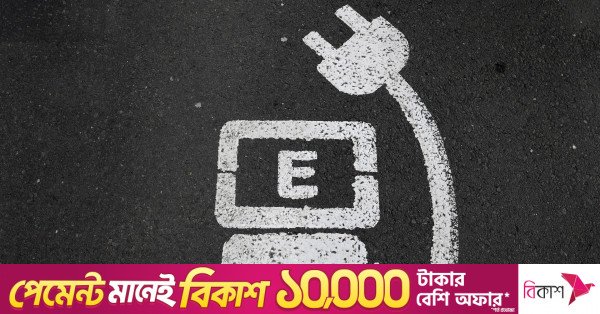
FILE PHOTO: A battery charger sign for electric cars is painted on the ground of a parking ground near the soccer stadium in Wolfsburg, Germany, April 6, 2016. REUTERS
“>

FILE PHOTO: A battery charger sign for electric cars is painted on the ground of a parking ground near the soccer stadium in Wolfsburg, Germany, April 6, 2016. REUTERS
The FY2026-27 budget has introduced incentives to encourage investment in the electric vehicle (EV) sector. Businesses have welcomed the measures and announced plans to expand charging infrastructure.
However, industry leaders say reliable electricity and commercial viability remain the biggest barriers to rapid growth.
Industry leaders say tax incentives alone will not be enough to accelerate the expansion of EV charging stations unless electricity supply becomes more reliable and operators can earn sustainable returns on their investments.

Hafizur Rahman Khan, chairman of Runner Automobiles, said every BYD vehicle sold by the company comes with a home charger that works with a standard household electricity connection. The challenge lies in commercial charging stations, which require uninterrupted, high-quality power.
He said home charging usually takes between five and 10 hours, but charging stations on highways need to recharge vehicles within five to 10 minutes using ultra-fast DC charging technology.
Although the technology is already available, Bangladesh still lacks the electricity quality and supporting infrastructure needed to deploy it on a large scale, he added.
According to Hafizur, setting up a conventional commercial DC fast-charging station requires an investment of around Tk1 crore to Tk1.5 crore. An ultra-fast charging station, including land and dedicated substations, could cost between Tk3 crore and Tk5 crore.
He said operators making such large investments may have to wait years before attracting enough customers to generate acceptable returns.
Shahriar Hasan Utsho, co-founder of Crack Platoon Charging Solutions, said his company is helping dozens of businesses establish charging stations and obtain regulatory approvals. While investor interest is strong, almost every investor wants to know how long it will take to recover the investment.
He said the limited number of EVs on Bangladesh’s roads makes it difficult to estimate when charging stations will become profitable.
He cited a privately operated charging station in Bogura that sometimes does not serve a single vehicle throughout the day because of low EV numbers.
Sreda Director Md Aminur Rahman acknowledged that nationwide deployment of ultra-fast charging infrastructure will take time. He said the authority is currently prioritising DC fast-charging stations while working to ensure uninterrupted electricity supply and promoting solar-powered charging stations.
Hafizur said the government should take the lead in developing charging infrastructure or provide financial support during the early stage of the market, adding that private investment is expected to grow naturally as EV adoption increases.
About The Author