Road Transport and Bridges MInister Shaikh Rabiul Alam said the government is implementing a range of policy measures to shift public transport to environmentally friendly fuels, reduce greenhouse gas emissions and build a sustainable transport system.
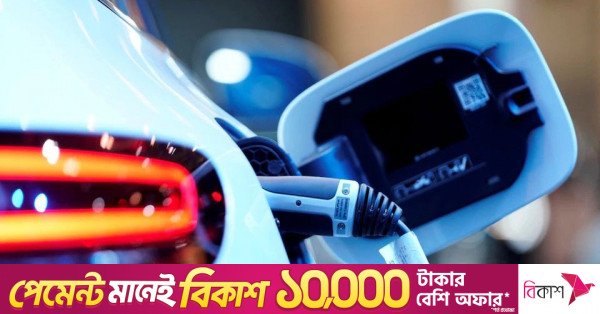
A charging port is seen on a Mercedes Benz EQC 400 4Matic electric vehicle at the Canadian International AutoShow in Toronto, Ontario, Canada, 13 February 2019. REUTERS/Mark Blinch
“>

A charging port is seen on a Mercedes Benz EQC 400 4Matic electric vehicle at the Canadian International AutoShow in Toronto, Ontario, Canada, 13 February 2019. REUTERS/Mark Blinch
Highlights
- 30% of road vehicles targeted to be electric by 2030
- Transport sector aims to cut 3.4m tonnes of CO₂ emissions
- EV registration policy already formulated
- Duty-free electric buses approved for educational institutions
The government has set a target of converting at least 30% of vehicles used in Bangladesh’s road transport sector into electric vehicles (EVs) by 2030 as part of its efforts to reduce carbon emissions and promote sustainable transport.
Road Transport and Bridges MInister Shaikh Rabiul Alam disclosed the plan in parliament today (13 July) while responding to an urgent public importance notice raised by ruling party lawmaker Shawkat Ara Akter from the reserved women’s seat-33.

He said the government is implementing a range of policy measures to shift public transport to environmentally friendly fuels, reduce greenhouse gas emissions and build a sustainable transport system.
The minister noted that greenhouse gas emissions from vehicles, particularly carbon dioxide, are a major contributor to global warming, making the transition from fossil fuel-powered vehicles to EVs increasingly important.
Under Bangladesh’s Nationally Determined Contributions (NDCs), the country has pledged to unconditionally reduce carbon dioxide emissions from the transport sector by 3.4 million tonnes by 2030. The 30% EV conversion target forms part of that commitment, he said.
To support the transition, the Road Transport and Highways Division has already formulated policies governing the registration and operation of electric vehicles.
The government has also approved duty-free imports of fully electric buses for educational institutions, while imports of such buses for other uses will be subject to a reduced 15% duty to encourage wider adoption.
Addressing demands raised by lawmakers, Robiul said bridge tolls are a revenue matter under the Finance Division, meaning the Ministry of Road Transport and Bridges cannot unilaterally waive tolls.
He added that toll concessions for smaller bridges could be considered through policy decisions in consultation with the Finance Division, but toll collection cannot be suspended solely based on requests or recommendations from individual lawmakers.
On calls to increase stoppages of intercity trains, the minister said existing policies are designed to preserve the fast-service nature of intercity rail.
Allowing trains to stop at every location would undermine their efficiency and defeat the purpose of rapid travel, he added.
About The Author