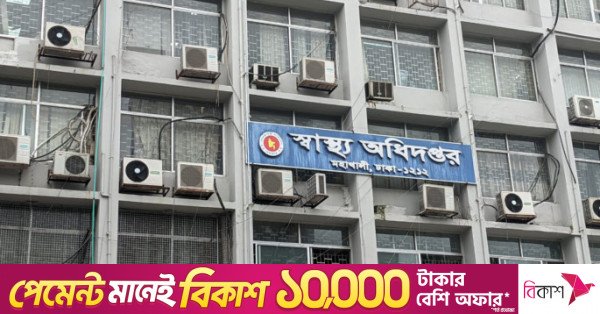
aThe Directorate General of Health Services (DGHS) has instructed health authorities in flood-affected districts and upazilas to form medical teams, stock emergency medicines and anti-snake venom, and ensure uninterrupted healthcare services for people affected by the floods.
The directives were issued following an emergency virtual meeting chaired by the DGHS director general last night (10 July).
The meeting was also attended virtually by the secretary of the Health Services Division, along with the DGHS additional directors general (Administration and Planning & Development), the director (Administration), divisional health directors, civil surgeons from all districts and other relevant officials.

According to the decisions taken at the meeting, each flood-affected upazila, district and division has been asked to appoint a focal person to maintain round-the-clock communication and coordination with the DGHS control room. The focal persons have also been instructed to share their mobile phone numbers with relevant agencies and stakeholders.
The DGHS has also directed authorities to form an adequate number of medical teams to provide emergency healthcare services in flood-affected areas.
To keep the public informed about healthcare activities, focal persons have been instructed to issue regular press briefings and press notes. An emergency press briefing has also been scheduled for 12 July to outline the measures taken to provide healthcare services to flood victims.
The health authority further instructed officials to ensure adequate stocks and uninterrupted supply of emergency medicines, oral rehydration salts (ORS), intravenous saline and water purification tablets in affected areas.
Considering the increased risk of snakebites during floods, all flood-hit upazilas have been directed to maintain sufficient stocks of anti-snake venom.
Authorities have also been asked to coordinate with neighbouring health facilities if additional supplies are required.
The DGHS also instructed health authorities to ensure healthcare services for pregnant women and children, arrange the transfer of expectant mothers to hospitals under government management when necessary, and coordinate with the Directorate General of Family Planning.
To keep health services operational, all flood-affected health facilities have been directed to ensure the presence of doctors, nurses, midwives and other healthcare workers.
Authorities have also been authorised to cancel leave if required to maintain essential services.
The directives will be implemented by upazila health and family planning officers, civil surgeons and divisional health directors across the country.
About The Author