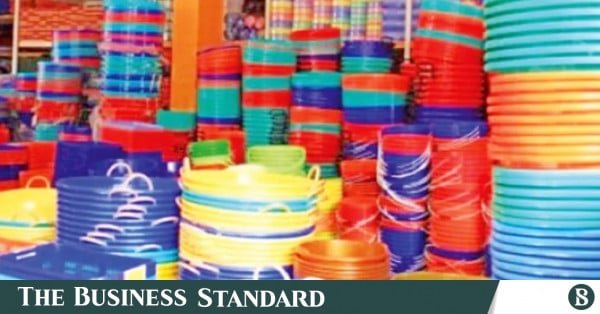
Manufacturers say delays in importing raw materials, rising production costs and sluggish domestic demand have forced many factories to cut output, while hundreds of small and medium-sized enterprises are struggling to survive
Representational image: Photo: BSS
“>

Representational image: Photo: BSS
Highlights:
- Plastic industry sales dropped Tk15,000 crore amid war and supply disruptions
- Around 300 plastic factories suspended production, mostly small and medium enterprises
- Raw material shortages and energy outages cut factory output significantly
- Manufacturers raised prices modestly despite sharply increasing production costs
- Construction and household plastic demand fell; packaging demand remained relatively stable
- Industry urges diversified imports, recycling expansion, reliable energy and policy support
Bangladesh’s plastic industry has suffered an estimated Tk15,000 crore decline in sales as the Middle East war, volatility in global petrochemical markets, and persistent domestic power and gas shortages disrupt production and weaken demand, according to industry leaders.
Manufacturers say delays in importing raw materials, rising production costs and sluggish domestic demand have forced many factories to cut output, while hundreds of small and medium-sized enterprises are struggling to survive.

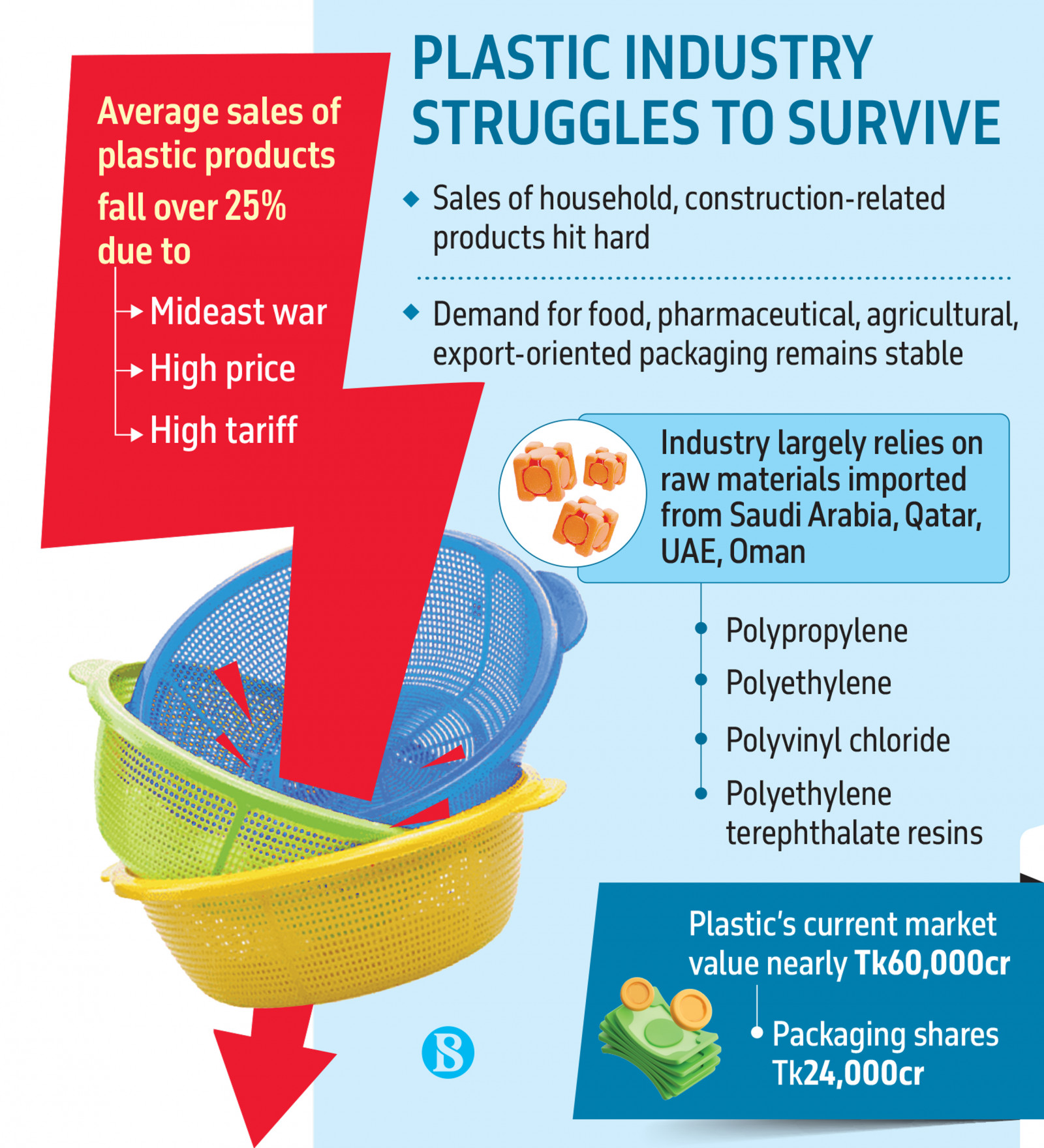
According to the Bangladesh Plastic Goods Manufacturers and Exporters Association, the country’s plastic market is currently worth around Tk60,000 crore, with packaging accounting for about 40% of the market.
“Our industry’s average sales have fallen by more than 25%, while some companies have experienced declines of 35% to 40%,” the association’s President Shamim Ahmed told The Business Standard. “Overall, we estimate that the sector has lost around Tk15,000 crore in sales.”
Infograph: TBS
“>
Infograph: TBS
The association estimates that nearly 300 plastic factories have already suspended production, most of them SMEs unable to cope with disruptions in raw material supplies, unreliable gas and electricity services, and working capital shortages.
Although the current fiscal year’s budget included some positive measures for the industry, Shamim said several key demands from manufacturers remained unaddressed.
To reduce dependence on imported virgin resin, manufacturers are increasing the use of recycled raw materials and exploring alternative sourcing markets.
According to the manufacturers and exporters association, recycled materials now account for about 38% of industry consumption. However, higher virgin resin prices have continued to push up production costs.
Bangladesh’s plastic industry relies almost entirely on imported polypropylene, polyethylene, polyvinyl chloride and polyethylene terephthalate resins, most of which come from Saudi Arabia, Qatar, the UAE, Kuwait and Oman. Any disruption in the Middle East or shipping through the Strait of Hormuz directly affects supplies, raising freight, insurance and production costs.
Riad Mahmud, managing director of National Polymer, said international resin prices remain relatively stable, but global supply chains have been severely disrupted. Government-set tariff values on imports have also further increased costs.
Manufacturers have raised product prices by 7% to 8% to offset higher expenses, although intense competition has prevented larger price adjustments, he said.
Raw material delivery times have also lengthened significantly. Previously, shipments reached factories within 18 to 21 days after opening letters of credit. Now deliveries take at least six weeks, while many consignments arrive even later.
Because of raw material shortages and energy constraints, most factories are operating at only 60% to 80% of their installed capacity, Riad added.
KM Iqbal Hossain, senior vice-president of the manufacturers and exporters association, said the price of a 25kg bag of polyethylene terephthalate resin has climbed from around Tk3,000 a few years ago to nearly Tk5,200, meaning an increase of over 73%. However, manufacturers have been able to increase product prices by only 5% to 10%, forcing many companies to continue production at a loss.
According to the association, the circumstances have reduced production by 10% to 30% in many factories. Injection moulding, blow moulding, and extrusion units have been the hardest hit, while reliance on diesel generators has further increased operating costs and complicated the timely delivery of export orders.
Industry insiders say sales have declined most sharply in construction-related and household plastic products, while demand for food, pharmaceutical, agricultural and export-oriented packaging has remained comparatively stable.
Manufacturers say the crisis has exposed the risks of Bangladesh’s heavy dependence on Middle Eastern petrochemical supplies. They argue that diversifying raw material sources, expanding the use of recycled resins, ensuring reliable energy supplies and strengthening policy support will be essential to maintaining the industry’s long-term competitiveness.
About The Author