“We can neither abandon them nor fully embrace them. This is one of the biggest challenges facing the current government,” he said
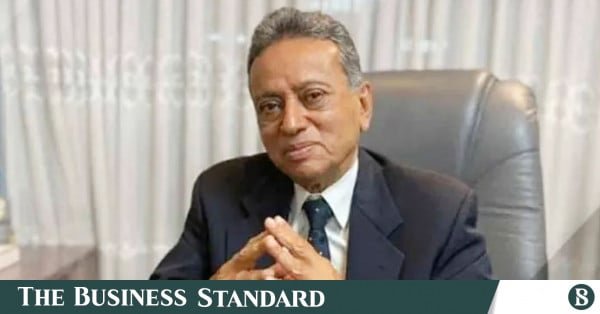
Photo: Amir Khasru Mahmud Chowdhury-Minister of Finance of Bangladesh
“>

Photo: Amir Khasru Mahmud Chowdhury-Minister of Finance of Bangladesh
Finance Minister Amir Khosru Mahmud Chowdhury today (25 June) said the government has inherited around 1,300 development projects from the previous administration, many of which have become a major liability as they are too advanced to be cancelled despite concerns over their necessity.
Speaking at a seminar titled ‘Debating Budget and Beyond’ organised by the Bangladesh Economic Association at the Institution of Diploma Engineers, Bangladesh (IDEB) in Dhaka, he said many projects are already 50-60% complete, leaving the government with little option but to continue them.
“We can neither abandon them nor fully embrace them. This is one of the biggest challenges facing the current government,” he said.

Khosru said some projects were dropped after review, but substantial investments made over the past 15 years require many others to proceed.
He said the government assumed office amid global economic uncertainty, including Middle East conflicts and trade-financing challenges, and is pursuing a new economic direction centred on the “democratisation of the economy”.
According to the minister, the previous system largely benefited organised and influential groups, while marginalised communities remained outside economic planning. He said the government wants to integrate blacksmiths, potters, cottage industries, handloom workers, cultural activists and rural women into the mainstream economy.
Khosru said the planned Family Card programme would boost rural purchasing power, while a Farmer Card initiative would provide direct support, including fertiliser and seeds, instead of increasing farmers’ debt. He noted that the government had previously waived about Tk10,000 crore in agricultural loans.
The minister said universal preventive healthcare, promotion of the creative economy and capital market reforms are among the government’s priorities. Plans include branding traditional products such as Shital Pati, pottery and handloom goods for global markets and establishing a theatre district in Purbachal.
Expressing concern over the country’s low tax-to-GDP ratio and declining access to international public financing, he said the government is pursuing legal, tax and institutional reforms to revive the capital market.
“We have formed a new commission composed entirely of professionals, with no political appointments,” he said, adding that global fund managers, including JPMorgan Chase, have shown interest in Bangladesh following the reforms.
Khosru also announced a digital dashboard system to monitor development projects. The dashboards will be installed at the Prime Minister’s Office, ministries and implementing agencies to track progress and identify delays in real time.
The minister said the government is servicing nearly Tk1.25 lakh crore in debt obligations, limiting fiscal space, but remains committed to creating 10 million jobs in the coming years.
He expressed optimism that implementing even 80% of the proposed budget would significantly support growth, employment and the government’s electoral commitments.
The seminar featured a keynote presentation by Mohammad Abdur Razzaque, chairman of Research and Policy Integration for Development (RAPID), and was chaired by Mahbub Ullah, convener of the Bangladesh Economic Association. Economist Abu Ahmed, Mohammad Nurul Amin, Imran Matin and other academics and researchers also took part in the discussion.
About The Author