Over the past 15 years, the railway has outsourced the commercial management of eight local and commuter trains, including Jamalpur, Dewanganj, Mahua, Balaka, Karnaphuli, two pairs of Titas services and Sagarika Commuter
Representational Photo: Collected
“>

Representational Photo: Collected
Highlights:
- Number of privately-run trains in eastern zone to reach 14
- Severe manpower shortage drives the move
- It aims to boost revenue, improve passenger services
- Core train operations, safety to remain under Bangladesh Railway’s control
- Privately-run trains generate 25% to 50% higher revenue than govt-ones: Railway data
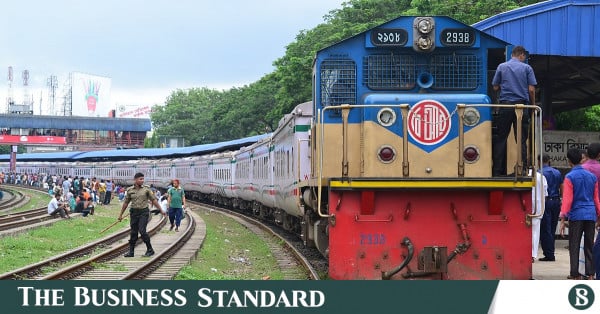
Bangladesh Railway has decided to hand over the commercial management of six more trains in its Eastern Zone to private operators in an effort to increase revenue and improve passenger services.
The proposal, which is awaiting approval from the Ministry of Railways, covers Jharia Local, Joydebpur Commuter, Narsingdi Commuter, Noakhali Express, Samatat Express, and Nazirhat Local. If approved, the number of privately managed trains in the region will rise to 14.

Railway officials said the move does not involve transferring core train operations to private companies. Bangladesh Railway will continue to control train movement and safety, while private operators will handle commercial activities such as onboard services, ticket checking, cleanliness and passenger management.
Over the past 15 years, the railway has outsourced the commercial management of eight local and commuter trains, including Jamalpur, Dewanganj, Mahua, Balaka, Karnaphuli, two pairs of Titas services and Sagarika Commuter.
According to railway officials involved with the initiative, the decision is driven largely by a severe manpower shortage. After allocating staff to intercity and long-distance trains, the railway often struggles to ensure adequate ticket inspection and passenger management on local and commuter services.
As of 2025, only 11,522 employees were working in the Eastern Zone against 22,358 approved posts. The shortage of travelling ticket examiners and ticket collectors has led to weak ticket-checking operations; as a result, many passengers take advantage of the situation and travel without tickets, causing revenue losses.
Infographic: TBS
“>

Infographic: TBS
Officials also pointed to equipment shortages. Locomotives and coaches are prioritised for intercity and mail trains, leaving local services under pressure. More than 90 local trains across the country have been suspended in recent years for this reason.
Among the six trains proposed for outsourcing, Noakhali Express is already out of service, while several others face a risk of suspension. Railway officials believe private operators can better coordinate with different railway departments to secure coaches and locomotives and keep services running regularly.
Railway data show privately managed trains generate 25% to 50% more revenue than those run entirely under government management.
The Jamalpur Commuter, handed over to private management in 2011, generated Tk4.29 crore in revenue in FY25, up from Tk1.91 crore in FY11. Revenue from the Dewanganj Commuter rose from Tk2.30 crore to Tk5.38 crore over the same period.
Similarly, Mahua Commuter’s revenue increased from Tk68.55 lakh in FY15 to Tk2.78 crore in FY25. Overall, the eight trains already under private management have increased the railway’s annual revenue by Tk15.83 crore.
Commercial leases are awarded through open tenders, usually for two to three years. Operators are selected based on bids calculated from previous ticket sales, train capacity and applicable taxes, with annual revenue targets increasing by 10%.
Mohammed Mahbubur Rahman, chief commercial manager of the eastern zone, told The Business Standard that private operators deploy ticket checkers in every coach, reducing ticketless travel and improving revenue collection.
“Private management helps maintain cleanliness, schedules and passenger services while also increasing railway revenue,” he said, adding that the government also benefits through higher VAT and income tax collections.
About The Author