Government officials, export associations, chambers and trade bodies discussed ways to improve utilisation of DCTS benefits, address market access barriers and strengthen Bangladesh’s competitiveness in the UK market after LDC graduation
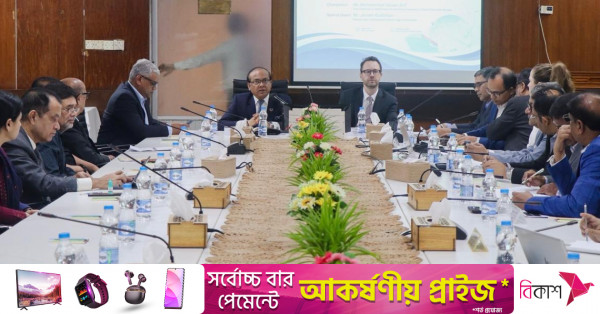
A roundtable discussion held at the EPB conference room today, where government officials, export associations, chambers and trade bodies discussed ways to improve utilisation of DCTS benefits, address market access barriers and strengthen Bangladesh’s competitiveness in the UK market after LDC graduation. Photo: Courtesy
“>

A roundtable discussion held at the EPB conference room today, where government officials, export associations, chambers and trade bodies discussed ways to improve utilisation of DCTS benefits, address market access barriers and strengthen Bangladesh’s competitiveness in the UK market after LDC graduation. Photo: Courtesy
The Export Promotion Bureau (EPB) and the British High Commission in Dhaka have agreed to launch a series of awareness and capacity-building initiatives to help Bangladeshi exporters make greater use of the United Kingdom’s Developing Countries Trading Scheme (DCTS) and prepare for the country’s graduation from least developed country (LDC) status.
The commitment came at a roundtable discussion held at the EPB conference room today (24 June), where government officials, export associations, chambers and trade bodies discussed ways to improve utilisation of DCTS benefits, address market access barriers and strengthen Bangladesh’s competitiveness in the UK market after LDC graduation, according to a press release.
Discussions centred on how exporters can better leverage the UK’s preferential market access scheme, the challenges and opportunities arising from Bangladesh’s transition from LDC status, and lessons from the ready-made garment sector that could support export diversification into other promising industries.

The event was inaugurated by Mohammad Hasan Arif, vice chairman and chief executive (additional secretary) of the EPB, while James Goldman, deputy high commissioner of the British High Commission in Dhaka, delivered the opening remarks on behalf of the UK government.
Ellie Parker, regional trade for development adviser for South Asia, Central Asia and the South Caucasus at the British High Commission, presented the keynote paper on the UK’s DCTS.
She outlined the implications of Bangladesh’s upcoming LDC graduation, recent enhancements to the scheme, opportunities available to Bangladeshi exporters and potential areas of collaboration to improve awareness and utilisation of the preferences.
As part of the initiative, the EPB announced plans to publish a comprehensive DCTS booklet to provide exporters with practical guidance on eligibility requirements, rules of origin, documentation procedures and preference utilisation.
The bureau also plans to organise a series of sensitisation workshops in Dhaka and Chattogram in partnership with the British High Commission, sector associations and business chambers to improve exporters’ understanding of the scheme and increase utilisation rates.
In addition, both organisations will undertake broader information dissemination activities through business associations and digital platforms to reach exporters across the country.
The roundtable was attended by leaders of several export-oriented trade bodies, including the Bangladesh Ceramic Manufacturers and Exporters Association (BCMEA), Bangladesh Plastic Goods Manufacturers and Exporters Association (BPGMEA) and Banglacraft.
Representatives from the Bangladesh Garment Manufacturers and Exporters Association (BGMEA), Bangladesh Knitwear Manufacturers and Exporters Association (BKMEA), Federation of Bangladesh Chambers of Commerce and Industry (FBCCI), Dhaka Chamber of Commerce and Industry (DCCI), Metropolitan Chamber of Commerce and Industry (MCCI), Footwear, Leather Goods and Accessories Exporters Association (FLAXA), Bangladesh Frozen Food Exporters Association, Bangladesh Chamber of Industry (BCI), Bangladesh Agro-Processors Association (BAPA), Bangladesh Land Port Authority (BLPA) and Bangladesh Association of Pharmaceutical Industries (BAPI), among others, also participated in the discussion.
About The Author