The clarification comes days after Zahed was reportedly held for more than two hours at Indira Gandhi International Airport on 14 June while travelling to attend the international conference.
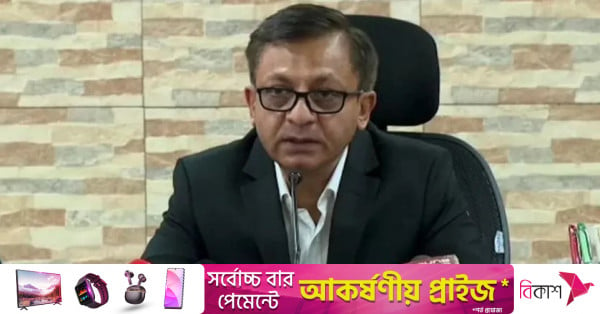
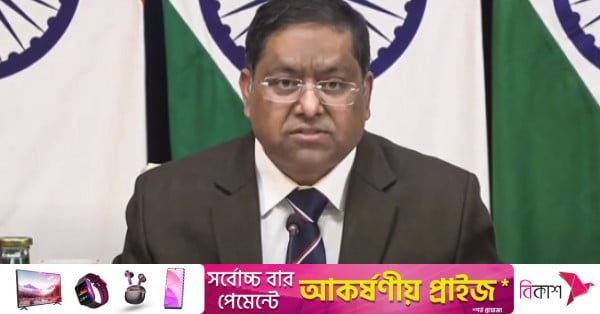
India’s Ministry of External Affairs (MEA) Spokesperson Randhir Jaiswal. File Photo: Collected
“>

India’s Ministry of External Affairs (MEA) Spokesperson Randhir Jaiswal. File Photo: Collected
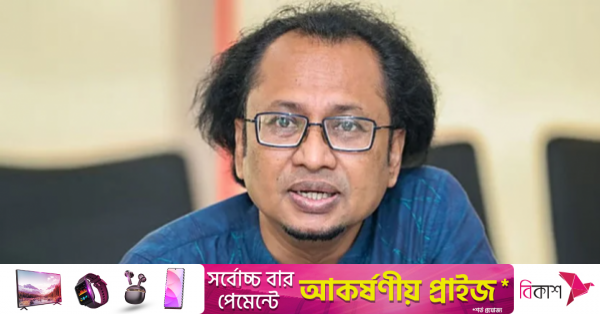
India has said Bangladeshi Prime Minister’s Information and Broadcasting Adviser Zahed Ur Rahman chose to return to Dhaka of his own accord after being questioned by immigration officials at New Delhi airport earlier this month.
Speaking at a weekly media briefing in New Delhi today (23 June), Indian Ministry of External Affairs (MEA) spokesperson Randhir Jaiswal said, “He [Zahed] was queried by immigration officials and subsequently permitted entry to the country after reconfirming that the purpose of his visit was to attend the 28th meeting of the Committee of Senior Officials of the Indian Ocean Rim Association.”
“He, however, chose to return to Dhaka on his own volition,” the spokesperson added.

Jaiswal also noted that Zahed had travelled to India on a regular Bangladeshi passport with a Saarc visa.
The clarification comes days after Zahed was reportedly held for more than two hours at Indira Gandhi International Airport on 14 June while travelling to attend the international conference.
Indian media reports suggested that his name appeared on an immigration watchlist during screening, triggering additional questioning and delaying his entry.

Sources familiar with the matter said the incident may have resulted from an administrative error, as his name had reportedly been removed from a social media-related blacklist but remained on an immigration watchlist.
After the delay, Zahed left New Delhi for Colombo on an Air India flight later that night and returned to Dhaka from Sri Lanka the following morning.
The incident prompted Bangladesh’s foreign ministry to summon Indian Deputy High Commissioner and Charge d’Affaires Pawan Badhe and formally convey Dhaka’s dissatisfaction over the treatment of the prime minister’s adviser.
Speaking at a press briefing on 16 June, Zahed said his decision to return to Bangladesh was an immediate protest against what he described as “harassment”.
“I felt there needed to be an immediate protest,” he told reporters at the Secretariat.
Zahed said Bangladesh had informed India’s Ministry of External Affairs about his visit at least two days before his departure.
Although Indian authorities later cleared him to enter the country and sought to facilitate his participation in the conference, he decided not to proceed.
“I did not go there as an individual; I went as a representative of the government and the state. What happened to me there required an immediate response from our side, which is why I decided to return,” he said.
He also rejected suggestions that the incident was related to his use of a regular passport instead of a diplomatic one, saying a diplomatic passport is not mandatory for official foreign travel.
India raises concern over alleged desecration of Hindu idols
At the briefing, Jaiswal also expressed concern over reports of alleged desecration of Hindu religious images and idols in Bangladesh’s Gaibandha district.
Responding to a question from a journalist, he said India expected the Bangladesh government to ensure the safety of minority communities.
“We have had reports about desecration of the images and idols of Hindu deities. We expect that the Bangladesh government would rein in extremists and guarantee the safety and security of minority communities in that country,” he said.
The remarks came after members of Bangladesh’s Hindu community held a protest in Dhaka last Friday (19 June), demanding action against those responsible for the alleged desecration of an image of Lord Ram in Palashbari upazila of Gaibandha.
About The Author