Highlights:
- BNP plans tax cuts to boost investment and jobs
- Weak banks may struggle to finance private-sector growth
- Bad loans exceed 32%, undermining banking stability
- Delayed reforms and uncertainty are eroding investor confidence
- Government borrowing is crowding out private-sector lending
- Bankers urge urgent reforms, asset recovery, and recapitalisation
The newly elected BNP government, in its first budget for FY27, is expected to offer tax cuts and other incentives to revive private investment and job creation, both of which have remained subdued in recent years.
But a critical question remains: where will the financing come from?

In Bangladesh, the private sector depends overwhelmingly on banks for funding – for new investments, business expansion or working capital – as the capital market has largely failed to emerge as a meaningful source of long-term finance.
That raises a bigger concern: are banks in a position to support an investment recovery?
The challenge is significant at a time when classified loans have surged beyond 32%, while dozens of banks are grappling with capital deficits and provision shortfalls.
This brings the focus back to a familiar but unavoidable issue: banking-sector reforms and governance. Without restoring the health and lending capacity of banks, efforts to stimulate private investment may struggle to gain traction.
Industry experts said although the government inherited a vulnerable banking sector, delays in key regulatory reforms aimed at restoring confidence are likely to hinder investment and job creation, ultimately affecting revenue mobilisation.
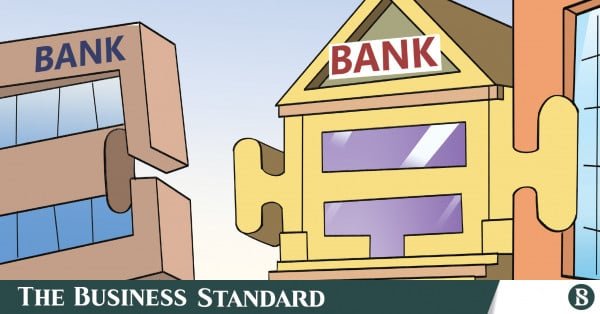
They said urgently needed reforms remain stalled, further eroding depositor confidence. The proposed merger of five banks is still uncertain, while Islami Bank, the country’s largest private commercial bank, continues to face ownership disputes.
The Bangladesh Bank has also provided no clear roadmap for resolving the banking sector crisis, deepening uncertainty across the financial system. Efforts to recover assets from money launderers have likewise been hampered by lengthy legal processes.
At a time when multilateral agencies are calling for greater central bank autonomy to restore discipline, the new government has yet to approve the Bangladesh Bank Ordinance drafted during the interim administration.
Instead, an amended Banking Resolution Act introduced a controversial provision allowing former owners to reclaim banks, further undermining customer confidence.
The lack of progress on reforms has frustrated the International Monetary Fund, contributing to the cancellation of an ongoing $4.7 billion loan programme, which has further weakened Bangladesh’s standing in international financial markets as domestic banks struggle to secure credit lines amid downgraded sovereign ratings.
Banks squeezed
At present, 20 banks remain undercapitalised, with a combined capital shortfall of Tk2.78 lakh crore, significantly limiting lending capacity.
The capital-to-risk weighted assets ratio (CRAR), a key measure of financial strength, fell to negative 2.64% at end-December, far below the 12.5% regulatory minimum.
Meanwhile, heavy government borrowing from banks to finance revenue shortfalls is crowding out private credit and constraining business expansion.
Bangladesh Bank data show government borrowing rose 36% year-on-year in March, exceeding the 21.6% monetary policy target for June.
Private sector credit growth remains weak, at 4.75% in April after a historic low of 4.72% in March, reflecting subdued confidence, slowing investment, and global uncertainty.
At the same time, non-performing loans continue to rise, increasing by Tk31,000 crore between January and March, pushing the default ratio to 32.26%.
‘Lack of direction eroding confidence’
Syed Mahbubur Rahman, managing director of Mutual Trust Bank (MTB), told The Business Standard that reforms have created confusion rather than clarity.
“One day we hear about mergers. The next day, sponsors of certain banks seek permission to acquire those same institutions. In some cases, even CEO appointments remain unresolved, leaving uncertainty over what their future structure will be.”
He said several banks are currently operating under administrators, while some do not even have board chairmen. “The government itself appears uncertain about how to proceed, and the lack of direction is eroding public confidence.”
He added that decisions cannot be delayed indefinitely and suggested bringing in international experts if necessary. “The important thing is to establish a clear direction.”
He noted that currency held outside the banking system has risen by roughly Tk3 lakh crore. If brought into banks, liquidity conditions would be significantly stronger. On investment, he said private-sector credit growth has fallen to around 4% and is unlikely to improve soon.
He cited uncertainty over energy and inflation as key constraints. “Fuel prices have already been raised twice, and electricity tariffs may also rise,” he said.
Rising inflation, he added, is pushing millions closer to poverty. “If domestic demand cannot be generated, where will economic growth come from?”
He said government development spending has fallen sharply, leaving banks with limited viable lending opportunities. The garment sector remains stagnant, while global conditions continue to exert severe pricing pressure.
He argued that without higher development spending, economic activity cannot be stimulated, as infrastructure is essential for private-sector growth.
Citing the economic zone in Narsingdi developed by City Group, he said large investments are being made but gas supply remains unavailable. “If basic infrastructure cannot be ensured, interest rate discussions alone will not solve the problem.”
He added that while some banks have liquidity, many are undercapitalised, with capital adequacy ratios effectively negative in several cases.
“We often assume banks have positive capital positions, but if the true level of non-performing loans were recognised, many would actually show negative capital,” he said.
He warned that this is becoming a serious obstacle for international banking operations. “Foreign banks increasingly ask: What is your capital position? If we cannot answer confidently, international business becomes difficult.”
He said the key solution lies in increasing revenues while reducing subsidies where possible.
“The government keeps borrowing from banks, but it must eventually repay that money. If debt-servicing capacity weakens, fiscal stress will increase. Printing more money is not a solution, as it would fuel inflation,” added the banker.
BAB’s call for regulatory reforms
Bangladesh Association of Banks (BAB in a recent meeting with the finance minister called for regulatory reforms and structural measures ahead of the budget.
BAB said meaningful recapitalisation would require stronger recovery mechanisms and decisive action against those accused of looting banks while still holding shares and assets within the financial system.
The association urged swift legal recovery, confiscation of illicitly acquired shares, and stronger enforcement to restore confidence and protect depositors’ interests.
It also raised concerns over Section 18(ka) of the proposed Banking Resolution Act, warning that any perception of returning controversial former sponsors or major defaulters could undermine depositor confidence, investor sentiment, and reform credibility.
About The Author