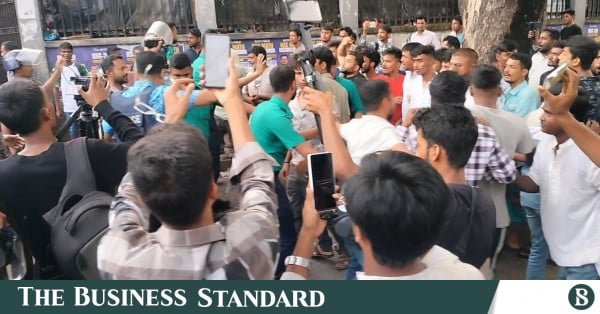
The incident took place in front of the hospital’s emergency department around 4:30pm while NCP leaders were preparing to hold a pre-announced press conference at the hospital premises.
A scuffle broke out between leaders and activists of NCP and members of Chattogram Medical College Hospital (CMCH) ambulance association this afternoon (7 June) in front of the hospital’s emergency department. Photo: TBS
“>

A scuffle broke out between leaders and activists of NCP and members of Chattogram Medical College Hospital (CMCH) ambulance association this afternoon (7 June) in front of the hospital’s emergency department. Photo: TBS
A scuffle broke out between leaders and activists of National Citizen Party (NCP) and members of Chattogram Medical College Hospital (CMCH) ambulance association this afternoon (7 June) over issues related to ambulance fares and services.
The incident took place in front of the hospital’s emergency department around 4:30pm while NCP leaders were preparing to hold a pre-announced press conference at the hospital premises, according to witnesses and party leaders.
Confirming the incident, Panchlaish Model Police Station Officer-in-Charge (OC) Md Zahedul Islam said tensions arose between the two groups over ambulance fare-related issues.

“Police quickly reached the scene and brought the situation under control,” he said.
The OC added that later, NCP leaders and activists completed their conference and left the area, and the situation is now normal. “However, police have remained deployed in the area to maintain law and order.”
He further informed that there had been some pushing and shoving between the two sides but no major clash.
At the conference, NCP Chattogram city unit Member Secretary Arif Moinuddin alleged that members of a so-called ambulance syndicate had attacked party activists in an attempt to foil their programme.
According to him, the NCP had taken a stand against “irregularities” and “excessive ambulance” fares, prompting the scuffle. Several party leaders and activists were harassed and physically assaulted during the incident, he added.
Arif also alleged that some ambulances were operating without valid documents and that certain vehicles were providing ambulance services using microbus licences. He further accused a group of controlling the business by keeping selected ambulances in a queue system and maintaining a monopoly over patient transport services.
NCP leaders alleged that an influential syndicate had long maintained exclusive control over the transportation of patients and bodies from the hospital.
They claimed the group was charging fares beyond approved rates and preventing ambulances from outside the hospital area from entering to provide services.
NCP leaders argued that most people seeking services at the hospital come from low-income and lower-middle-income backgrounds, and excessive ambulance charges add to the financial burden of medical treatment.
They demanded the introduction of an open and competitive ambulance service system that would allow any legally registered ambulance to transport patients from the hospital.
However, rejecting the allegations, leaders of the CMCH ambulance association said they have been operating in accordance with rules approved by the authorities and following an established serial system.
They claimed that certain individuals and organisations had repeatedly attempted to pressure them into informal discussions, but they had refused to engage in any arrangement outside the administrative framework.
Association leaders further alleged that efforts had been made to evict them, threaten them and lodge complaints against them with the authorities.
They maintained that relevant authorities had examined their documents and allowed them to continue operations. The leaders also denied allegations of extortion.
About The Author