He warned that higher fuel prices would place an additional burden on ordinary people.
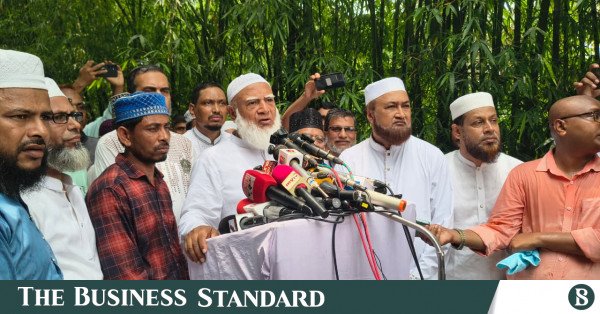
Leader of the Opposition and Bangladesh Jamaat-e-Islami Ameer Shafiqur Rahman speaking to media in Sylhet today, after visiting the family of Fahima Akter. Photo: TBS
“>

Leader of the Opposition and Bangladesh Jamaat-e-Islami Ameer Shafiqur Rahman speaking to media in Sylhet today, after visiting the family of Fahima Akter. Photo: TBS
Leader of the Opposition and Bangladesh Jamaat-e-Islami Ameer Shafiqur Rahman today (2 June) said the country is not doing well and is currently moving in a direction opposite to the expectations created through the sacrifices made by people.
Speaking to media in Sylhet after visiting the family of Fahima Akter, a child who was recently murdered, he said, “No matter how fierce the current is, we will continue our fight against it.”
Responding to a question from reporters regarding his assessment of the government’s first 100 days in office, Dr Shafiqur said he would present a detailed assessment during the upcoming parliamentary budget session, which begins on 5 June.

Responding to a question on the recent increase in fuel prices, the opposition leader criticised the government’s decision, saying fuel prices had been raised by nearly 15% last month and by another Tk5 per litre this month.
“Raising prices like this without any discussion in parliament is a betrayal against the people. Even the newly formed committee on fuel was not consulted,” he said.
He warned that higher fuel prices would increase the cost of goods and services, placing an additional burden on ordinary people.
Calling the move “anti-public interest”, he said the ultimate sufferers would be the country’s citizens.
Commenting on the recent deaths of children from measles, Dr Shafiqur said responsibility for the situation could not be shifted solely onto the interim government.
“People want to know why adequate vaccine supplies were not ensured. The measles outbreak did not begin overnight. Why were preventive measures not taken earlier?” he said, adding that he would raise the issue in parliament.
Referring to the murder of child Fahima, Dr Shafiqur said the perpetrator had destroyed both the life and dignity of an innocent child.
“A child like a rose was taken away from her mother’s eyes. Such a criminal has no right to live in society,” he said.
He argued that unless exemplary punishment is ensured, crimes of this nature would continue to increase.
“We are ashamed as a nation. We cannot even protect the dignity of innocent children, yet we continue to make grand speeches,” he said.
The opposition leader also alleged that the accused did not act alone and called for the prosecution of anyone who assisted in the crime.
“Those who helped him must also be brought under the law. Only then will others think twice before assisting such offenders,” he said.
Questioning delays in the investigation, Dr Shafiqur noted that 28 days had passed since the incident but the charge sheet had yet to be submitted.
“If the local police cannot perform their duties properly, then there is no reason for them to remain here,” he said.
Drawing a comparison with the high-profile Ramisa murder case in Dhaka, he said the prime minister had announced that the trial would be completed within a month and urged local authorities to take similar steps to expedite the Fahima murder case.
At one point, standing beside Fahima’s father, an emotional Dr Shafiqur said, “You can see smile on my face, but there is sorrow in my heart. It is impossible to hold back tears when looking at Fahima’s photograph.”
About The Author