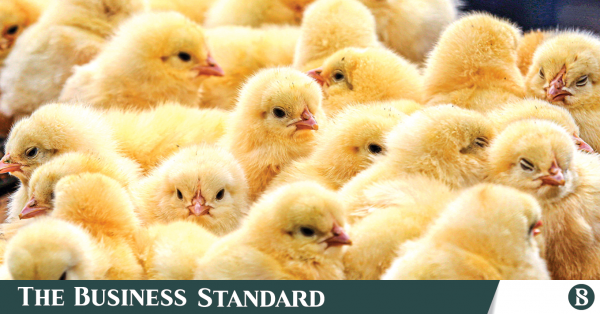
The final draft of the policy has already been published on the government website for public feedback and is expected to be placed before the cabinet for approval soon, according to officials familiar with the process
Photo: Zakir Hossain
“>

Photo: Zakir Hossain
Highlights:
- Proposed chick import ban alarms producers over shortages, higher prices
- Poultry Development Policy 2026 awaits cabinet approval
- Government frames poultry as strategic food security sector
- Industry warns abrupt ban could destabilise supply chains
- Domestic hatcheries supply 75–80%, imports remain critical buffer
- Experts urge phased ban aligned with realistic capacity limits
The government’s proposed ban on importing day-old broiler and layer chicks under the Poultry Development Policy 2026 has triggered growing concern among poultry producers, who fear the move could disrupt supply chains and push up prices if implemented without transitional safeguards.
The final draft of the policy has already been published on the government website for public feedback and is expected to be placed before the cabinet for approval soon, according to officials familiar with the process.

The policy marks a significant shift in how the state intends to manage the poultry sector, formally recognising it as a strategic food security industry.
While policymakers argue that the move will strengthen domestic capacity and reduce import dependence in the long run, industry stakeholders caution that the proposed import ban, if implemented abruptly, could destabilise supply chains and create fresh volatility in prices.
Bangladesh Poultry Industries Association President Mosharraf Hossain Chowdhury stressed that policy decisions must prioritise farmers. “Poultry is not just a business; it is central to food security. Any decision must ensure that farmers receive chicks on time and at fair prices,” he told TBS.
Infograph: TBS
“>

Infograph: TBS
Self-reliance and regulation
According to the draft, the Poultry Development Policy 2026 prioritises expanding local production capacity, improving disease control, strengthening biosecurity, ensuring quality feed and hatchery management, and gradually reducing reliance on imports. The policy also aims to bring greater discipline to the sector through stronger monitoring and enforcement.
One of its most debated provisions proposes a total ban on importing day-old broiler and layer chicks, a move the government says is intended to encourage investment in domestic breeder farms and hatcheries.
The policy also outlines plans to introduce a centralised database and traceability system for poultry disease control, allowing authorities to track production, movement, and biosecurity compliance across the supply chain.
In addition, the draft mandates strict action against low-quality hatcheries and farms, arguing that inconsistent quality and weak compliance have contributed to production inefficiencies, disease outbreaks, and farmer losses.
As the Poultry Development Policy 2026 moves towards cabinet approval, it reflects the government’s ambition to build a self-reliant poultry sector through regulation, quality control, and domestic investment. Yet industry stakeholders argue that without careful sequencing and transitional safeguards, the policy risks undermining short-term supply stability.
The challenge now lies in aligning long-term policy goals with current market constraints, a balance that will ultimately determine whether the new framework strengthens food security or introduces new volatility into one of Bangladesh’s most critical protein sectors
Government officials maintain that these measures are essential for building a more resilient and organised poultry industry. “The draft has been prepared to ensure overall sectoral development, while also protecting investors,” said ABM Khaleduzzaman, director (production) at the Department of Livestock Services. “Once implemented, the policy will help the poultry sector become stronger and more sustainable.”
Industry concerns over timing and capacity
Despite these assurances, poultry entrepreneurs argue that the policy underestimates current market realities. Bangladesh currently requires around 700-800 crore broiler and layer chicks annually, of which domestic hatcheries supply approximately 75-80%. The remaining 20-25 percent is met through imports, which industry players describe as a critical buffer during supply disruptions.
Stakeholders say they raised these concerns during multiple consultations held before finalising the draft, including meetings attended by the fisheries and livestock adviser. While participants reportedly urged caution in imposing an outright ban, citing food security and consumer interest, the provision remained in the final draft, prompting frustration among industry bodies.
A senior leader of the Bangladesh Poultry Industries Central Council warned that domestic capacity, though expanding, is not yet sufficient to absorb a sudden ban.
“If imports are stopped now, shortages will emerge. That will push up chick prices, reduce production, and eventually raise chicken and egg prices for consumers,” he said.
Day-old chick production in Bangladesh is heavily concentrated among a handful of large corporate groups, including Kazi Farms Group, Aftab Group, Navana Group, Paragon Group, CP Bangladesh, Beximco Agro, and Diamond Hatchery. Industry estimates suggest these players collectively control around 70-80% of total domestic production.
However, much of this output is consumed internally through vertically integrated operations, contract farming arrangements, or group-linked farms. As a result, effective buffer capacity for the open market remains limited, leaving independent and small farmers vulnerable during supply shocks.
Price volatility and policy trade-offs
Data from poultry associations show that Bangladesh produces roughly 20 lakh broiler chicks per day, with production costs ranging between Tk28 and Tk30 per chick. Yet during shortages, farmers report paying Tk48-Tk50, eroding profitability and forcing many marginal producers out of the market.
Critics argue that maintaining limited import flexibility during crisis periods helps prevent price manipulation and protects competition. They also point to risks associated with breeder and grandparent stock imports, approvals for which can take six to eight months, potentially creating supply gaps if planning assumptions fail.
Experts have echoed calls for a phased or conditional approach. Professor Md Bahanur Rahman, dean of the Faculty of Veterinary Science at Bangladesh Agricultural University, said policymakers must realistically assess domestic capacity before enforcing a ban.
“We need to ensure not only production capability, but also a consistent, affordable supply to farmers,” he noted.
About The Author