When Camelia Valdivia Carnero’s son asked her for her tacos dorados recipe, he’d hoped for exact measurements.
How much salt should he add to the ground beef? How much pepper? But that’s not the spirit of the dish. “Tantéale,” she said, or feel it out.
Tacos dorados are made by feel, with techniques passed down through relatives. Many have even learned how to prepare them by simply being in the kitchen when they’re made.
“It’s very visual,” said Estefania Valenzuela, whose TikTok video about the tacos racked up over 10 million views and spurred a healthy discourse over how to make them.

Camelia Valdivia Carnero still makes tacos dorados as her mother and grandmother did.Credit…Hannah Gentiles
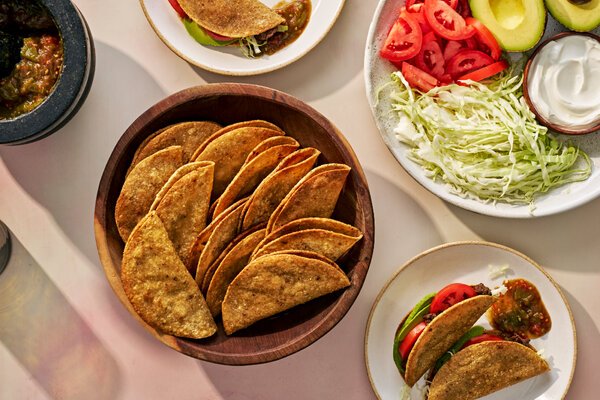
Ms. Valdivia Carnero, whose family has lived in Ojinaga in Chihuahua, Mexico, for six generations, still makes them as her mother and grandmother did, with seasoned ground beef, black pepper, garlic salt and her personal touch, chopped cilantro. The meat is spread raw on a corn tortilla, then fried in oil in an esquile, a cast-iron skillet, until golden and crisp. She serves them with a salsa de molcajete, shredded cabbage, sliced tomatoes, an avocado if one’s ripe and crema.
No one can trace exactly where this style of taco comes from or how far it has traveled, though there are some clues. Spanish colonization brought waves of soldiers, miners and ranchers who sought out portable, ready-made meals, cooked with what was on hand: tortillas, beef, lard. (The word taco is even thought to come from mining culture — what miners called the wrapped explosives they used to excavate ore — according to Jeffrey M. Pilcher, the author of “Planet Taco,” though some historians also point to the Nahuatl word tlahco, which means half, as the etymological source.)
With their ease and convenience, they eventually became a weeknight staple of the region.
Koyana Flotte is an anthropologist and ethnographer who traces her ancestry to the Lipan Apache and the Indigenous people of La Junta, who share a name with the confluence of rivers where Ojinaga sits today. Ms. Flotte said her grandmother, who grew up in a mining settlement, had most likely introduced tacos dorados to her family. “We grew up eating them,” she said. “There’s not a lot of places that sell them even in Ojinaga. It’s an intimate kind of meal. Like knowledge, it gets passed on.”
That, too, is how Ms. Valenzuela learned to make them. Growing up, she would spend almost every weekend and summer in Ojinaga, where her Tía Ninfa made tacos dorados at least three times a week and served them with a pitcher of lemonade.
“You know how moms at least once a week have to make spaghetti for the kids?” Ms. Valenzuela said. “That’s what tacos are for us. They have to be on the menu.”
She said that the first time she made them for her husband, who grew up in nearby Coyame, he took issue with her spreading the raw ground beef on the tortilla.
“Oh, you’re doing it wrong,” she recalled him saying. “That’s not how it goes.” But she assured him it was.

Ms. Valdivia Carnero preparing the tacos.Credit…Hannah Gentiles

Ms. Valdivia Carnero prefers to fry the tacos folded, gently dropping them in seam first.Credit…Hannah Gentiles
Variations are common. Some, like Ms. Valdivia Carnero, prefer to fry them folded, gently dropping in the seam first to let it soften into shape before placing the rest of the taco into the skillet. Ms. Valenzuela likes to immerse the beef half of the taco in the oil, while holding the other half above, until the tortilla has softened enough so as not to crack when folded.
Both serve another Mexican classic alongside the tacos: sopa de fideo, an easy weeknight staple that makes the most of a few ingredients. And maybe that’s how recipes survive, how memories are made, when everyone, including the cook, looks forward to enjoying the same meal, again and again.
Follow New York Times Cooking on Instagram, Facebook, YouTube, TikTok and Pinterest. Get regular updates from New York Times Cooking, with recipe suggestions, cooking tips and shopping advice.
About The Author