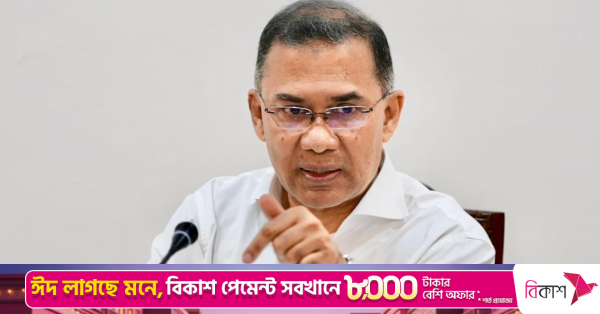
State Minister for Primary and Mass Education Bobby Hajjaj has warned that no negligence or irregularities in the quality and supply of nutritious food under the school feeding programme will be tolerated.
Speaking at an instruction-oriented coordination meeting in the capital today (24 May) with supplier companies, project officials and field-level stakeholders involved in the programme, he said the initiative is directly linked to children’s nutrition, health and future, and therefore all concerned must carry out their responsibilities with utmost accountability.
He said the school feeding programme is currently being implemented in 151 Upazilas under a project worth around Tk5,500 crore, adding that failure to meet public expectations in such a large initiative would be embarrassing for both the government and those involved.

Addressing supplier companies, he said that while the current government is business-friendly, there is no scope to compromise on the quality of children’s food in the name of business, and those failing to properly fulfil their responsibilities would not be allowed to continue in the programme in future.
The state minister also instructed the authorities concerned to strictly implement a set of new directives, including full supply chain mapping, recruitment of food technicians, ensuring local sourcing and supply of food, timely delivery to schools and strengthening quality control mechanisms. He said the government must have complete information on where the food comes from, how it is processed and through whom it reaches schools.
He said the government’s main goal is to ensure that children receive proper nutritious food, adding that all realistic support would be provided, but those responsible must also perform their duties properly.
Representatives of supplier companies raised various field-level challenges and shared practical experiences during the meeting. In response, the state minister said stronger cooperation would be ensured from teachers, head teachers and local administration.
Describing the initiative as a pilot programme, Bobby Hajjaj said the problems currently being identified would be resolved before expanding the programme further across the country.
About The Author