At the Postogola cattle market, TBS talked to several cattle traders and tried to learn about the overall situation yesterday
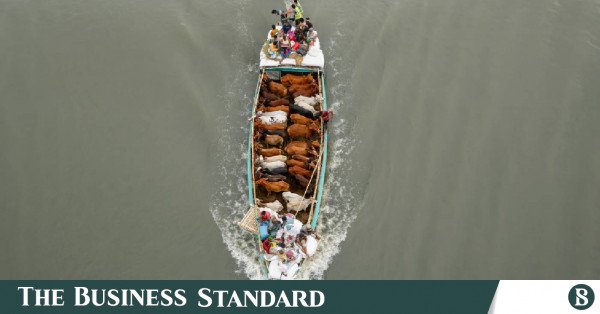
A boat packed with sacrificial cattle navigates the Buriganga River on Friday, heading towards Dhaka ahead of Eid-ul-Azha. Traders transport these animals from various districts to the capital’s makeshift cattle markets to meet the massive demand for the upcoming festival. Photo: Rajib Dhar
“>

A boat packed with sacrificial cattle navigates the Buriganga River on Friday, heading towards Dhaka ahead of Eid-ul-Azha. Traders transport these animals from various districts to the capital’s makeshift cattle markets to meet the massive demand for the upcoming festival. Photo: Rajib Dhar
Highlights:
- AI cameras detect Dhaka traffic violations, filing hundreds of automated cases
- Unregistered autorickshaws evade penalties due to missing database records
- Autorickshaws frequently block crossings, ignore lanes, worsening Dhaka congestion
- Motorcyclists increasingly follow traffic rules fearing AI-based fines
- Experts say regulation needed alongside AI cameras for effective enforcement
- DMP plans policies targeting unlicensed vehicles and illegal rickshaws
As Eid-ul-Adha nears, Dhaka’s cattle markets have started buzzing with the presence of sellers, buyers, sacrificial animals, noise, dust, and anticipation as vehicles carrying cattle from the districts were entering the temporary bazars.
This year, however, traders are hopeful of earning a good profit as they believe the last-minute collapse in prices, unlike previous years, will not happen due to some factors.

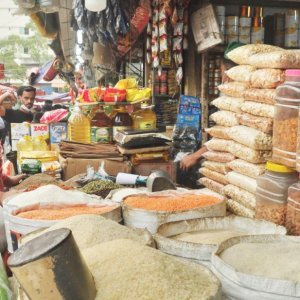
At the Postogola cattle market, TBS talked to several cattle traders and tried to learn about the overall situation yesterday.
One of them, Monirul Mia, who came from Chapainawabganj with 26 cattle, including 11 from his own farm, said several factors have shifted the market in favour of local traders this year.
Stricter border surveillance, the closure of cattle markets along frontier areas, and tighter restrictions on cattle transportation in India’s West Bengal have significantly reduced the flow of Indian cattle into Bangladesh this year, which will ultimately help traders to bag a good profit, he said.
Besides, political and economic instability over the past year has forced many large local farms to shut down, limiting overall supply to the market, according to traders.
This time, the overall situation indicates no oversupply of sacrificial animals; traders anticipate steady demand and stronger prices.
Last year, political and economic instability weakened business, forcing many traders to sell cattle cheaply in the final days before Eid as buyers delayed purchases. This year, however, the atmosphere feels more stable and promising.
Some traders also expect the upcoming local government elections to indirectly boost demand, as political leaders and influential local figures often sacrifice multiple cattle during Eid.
In districts such as Jashore, Kushtia, Rajshahi, Sirajganj, and Pabna, small and medium-sized farmers were becoming increasingly important.
Many of the large commercial farms established during the previous Awami League government were no longer operating. Once capable of selling hundreds of cattle annually, many had shut down due to rising costs and changing political realities.
At the TT Para intersection in Dhaka, trader Mohin Bepari from Monirampur in Jashore watched workers feed straw to exhausted cattle after an overnight journey.
He said several major farms in his region had recently closed. Together with neighbouring traders, he had brought 32 truckloads of cattle to the capital this year.
“We didn’t make much profit in recent years,” he said. “But this time we hope prices will finally improve.”
Throughout the city, preparations for Eid markets were in full swing. Bamboo enclosures rose along roads near Kamalapur, while at the Shahjahanpur Maitri Sangha Club ground, workers hammered bamboo poles into muddy soil as trucks waited to unload cattle.
Some workers splashed water on animals to protect them from the heat, while others hurried to arrange feed and drinking water.
Despite the optimism, traders remained concerned about poor market management. Many complained about overcrowding and inadequate space for cattle. Experienced sellers arrived early to secure spots near entrances and busy walkways, believing visibility could determine sales.
“Good spots matter,” said trader Abdur Razzaq from Rajshahi. “Buyers notice cattle near the front first. That can make all the difference.”
For now, most visitors were only browsing and asking prices. Traders expected serious buying to begin two or three days before Eid.
This year, Dhaka is set to host 24 cattle markets, including the permanent Gabtoli market and numerous temporary sites under the city corporations. Nationwide, more than 3,600 cattle markets are expected to operate during the Eid season.
According to the Department of Livestock Services, Bangladesh prepared over 12.3 million sacrificial animals against an estimated demand of just over 10 million, suggesting a surplus of nearly 2.2 million animals.
Traders, however, argue that the official numbers do not reflect reality. They say the statistics overlook the hundreds of farms that disappeared over the past year and a half.
Rising feed prices, cattle theft, loan crises, and political transition have weakened the industry nationwide. In Chattogram alone, more than 500 farms reportedly shut down.
About The Author