Highlights:
- Cardamom prices jump by Tk300 per kg ahead of Eid
- Ginger prices rise by up to Tk20–Tk30 per kg in a week
- Onion and garlic prices remain relatively stable in markets
- TCB reports dried chillies up 35% year-on-year
- Poultry prices fall slightly while layer chicken becomes costlier
The price of cardamom has risen sharply in Dhaka ahead of Eid-ul-Adha, as have other spices across the market, while vegetable prices have also climbed, putting pressure on low-income consumers.
Cardamom has recorded the steepest price rise in the capital’s markets, increasing by around Tk300 per kg within the past one to one and a half months. It is now selling at Tk4,400 to Tk5,500 per kg depending on quality.

Prices of most other spices have also increased. Cumin is being sold at Tk550 to Tk650 per kg, up from Tk500 to Tk600 a month earlier. Cloves are priced at Tk1,400 to Tk1,500 per kg, compared to Tk1,300 to Tk1,400 previously.
Cinnamon is selling at Tk480 to Tk550 per kg, black pepper at Tk1,200 to Tk1,350, bay leaves at Tk180 to Tk220, turmeric at Tk250 to Tk400, and dried chillies at Tk320 to Tk400.
Ginger prices have also increased, with rates now at Tk200 to Tk220 per kg depending on variety, up by Tk20 to Tk30 from last week.
However, onion and garlic prices have shown some stability. Local onions are selling at Tk40 to Tk50 per kg, while imported garlic is priced at Tk140 to Tk160. Local garlic is available at Tk80 to Tk100 per kg.
Visiting Karwan Bazar, New Market and Lalbagh yesterday (22 May), it was observed that although supply remains adequate, retail prices are higher than in previous weeks.
Anwar Chowdhury, a private sector employee at Karwan Bazar, said spending on spices has become more difficult.
“The money I used to spend on spices for a month now lasts barely a week,” he said, adding that prices usually rise ahead of Eid.
Miraj Ahmed, a spice trader at Lalbagh, said demand increases during Eid as customers buy and stock in bulk. He added that higher wholesale prices are pushing up retail rates despite stable imports.
According to the Trading Corporation of Bangladesh (TCB), over the past year, cinnamon prices have risen by about 5%, cloves by 3%, cardamom by 5%, ginger by 13% and dried chillies by around 35%, while cumin prices have fallen by about 5%.
Haji Enayet Ullah, president of the Bangladesh Wholesale Hot Spice Traders Association, said the market remains largely stable and claimed that some products are even priced lower than expected.
He also pointed to the impact of smuggled goods on legal traders, though he said there is no significant supply shortage.
Vegetable prices rise as Eid approaches
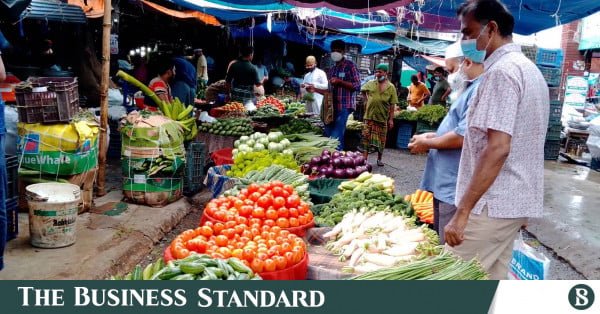
Alongside spices, vegetable prices have also increased ahead of Eid-ul-Adha, with several essential items becoming more expensive over the past week.
Tomatoes are now selling at Tk100 per kg, up from Tk80 earlier in the week. Carrots have risen to Tk120 per kg from Tk100, while cauliflower is now priced above Tk100, compared to Tk80-Tk90 previously.
Gourd prices have increased to around Tk100 per piece, up from Tk70-Tk80 last week. Potatoes, a staple for low-income households, have also increased by Tk5 per kg and are now selling at Tk30.
However, a few vegetables have seen price declines. Long brinjal has fallen by Tk20 per kg to Tk100, while radish has dropped from Tk80 to Tk60 per kg.
Other vegetables include lady’s finger at Tk60 per kg, bitter gourd at Tk100, snake gourd and pointed gourd at Tk80, and papaya at Tk100 per kg.
Tareq, a vegetable seller at New Market, said prices have increased due to lower supply as the season ends. He added that wholesale costs are driving retail prices higher, though he expects some stabilisation in the coming days.
In the poultry market, broiler chicken prices have eased slightly to Tk175-Tk180 per kg from Tk190 a week earlier. Sonali chicken has also fallen to Tk350 per kg from Tk370.
However, Pakistani layer chicken prices have increased, rising to Tk400 per kg from Tk320-Tk330.
Consumers said rising prices of vegetables, fish and beef are forcing many households to reduce overall food purchases.
Arif Hossain, a shopper at New Market, said families are now forced to prioritise essential items and cut back on variety in their meals
About The Author